Presume nothing. Players are a blank slate. Fill it up.
Dwayne Casey brings great energy to this FIBA clinic. It's worth the half-hour investment. Teaching is hard work.
Highlights:
Dwayne Casey...defense matters in every sport.
Trust comes from players knowing you care.
Players need to know their responsibility. Casey clarifies what he's willing to give and what not.
Have your priority (ball pressure, no paint) and execution (borrowed from Extreme Ownership)
Stance (like sitting in a chair, athletic stance)
"Nose to chest"
3 dribble drill (about developing habits for on-ball defense).
Within shell drill, he works on core elements.
Contain the ball.
Communicate (ball, nail, help).
Closeout under control.
Challenge shots.
"Don't reach." Missing has consequences (fouls, numbers).
"Defense starts on your shot." Casey, like Doc Rivers, favors transition D versus offensive rebounding.
He (like many) does NOT help off the Corner 3.
Emphasis on hip turn and sprint not slide (much like Brian McCormick)...I call this "cornerback" as in NFL...
Help on penetration "sword fighting, a.k.a. stabbing", "fake and stay".
Tag the cutter forcing to the help. This also demands that the help locate to the paint/loads to the ball.
"Thirst for knowledge."
Seven fundamentals:
1) Stance
2) Embrace the contact (Fight for space).
3) Communication - verbal and non-verbal
4) Seeing - anticipate.
5) Attention to detail - demand.
6) Have an act.
7) Finish (cut, score, drill).
Total Pageviews
Wednesday, March 22, 2017
Tuesday, March 21, 2017
The Rules of Basketball
We spend time teaching 'the rules of basketball', but I refer to the rules of life. What two people derive from the same experience differs. They might share the same coach, teammates, demands, opportunities, and experience but not the results. One might flourish and another suffer. How can that be?
What 'rules' can we practice?
Know your craft. Knowledge is power. Most young players comprehend less with lower basketball IQ than we think. Teach more and coach less. "Trust but verify." Create a performance-focused, feedback-rich culture. "Explain this to me."
Develop functional habits. Charles Duhigg discusses "The Habit Cycle" (above) in The Power of Habit. Coaches or players, we can improve our study habits, diet, practices. Urban Meyer preaches the 10-80-10 principle. Ten percent of players are overachievers, eighty percent average, and the percent underachievers. He demands that the top ten percent raise the standard by bringing some of the eighty percent along. If an elite player wants to work out, insist that they bring a teammate or teammates.
Fantastic happens when team leaders raise the "rank-and-file", joining them with elite preparation.
Be a team player. The best teams have leaders who are great teammates. Teamwork begins with accountability. Brad Stevens references QBQ. Repurpose your play, refocus your inner voice to "what can I do now for us?" Encourage better support for the group and specific actions.
Appreciate opportunity and service. In Up the Organization, Robert Townsend writes about Thanks - "A really neglected form of compensation." Thank people regularly who help us. I've written coaches and authors I'll never meet to thank them for their contributions. No reply is needed.
Savor the chance to say "yes". Share something great. Pay it forward. "Cast thy bread upon the waters, for thou shalt find it after many days." Jerry Tarkanian was a coach who boldly went where no one looked before for players.
Make the game for the players. "Don't hate the players, hate the game." Rephrased, "are we building a program or a statue?" The success of our programs depends on relationships between coach and players, among coaches, and among the players. Our business is relationships. Collaborate to get synergies. Make it we not me.
What 'rules' can we practice?
Know your craft. Knowledge is power. Most young players comprehend less with lower basketball IQ than we think. Teach more and coach less. "Trust but verify." Create a performance-focused, feedback-rich culture. "Explain this to me."
Initial pass and stagger.
Screen-the-screener action.
Develop functional habits. Charles Duhigg discusses "The Habit Cycle" (above) in The Power of Habit. Coaches or players, we can improve our study habits, diet, practices. Urban Meyer preaches the 10-80-10 principle. Ten percent of players are overachievers, eighty percent average, and the percent underachievers. He demands that the top ten percent raise the standard by bringing some of the eighty percent along. If an elite player wants to work out, insist that they bring a teammate or teammates.
Fantastic happens when team leaders raise the "rank-and-file", joining them with elite preparation.
Be a team player. The best teams have leaders who are great teammates. Teamwork begins with accountability. Brad Stevens references QBQ. Repurpose your play, refocus your inner voice to "what can I do now for us?" Encourage better support for the group and specific actions.
Appreciate opportunity and service. In Up the Organization, Robert Townsend writes about Thanks - "A really neglected form of compensation." Thank people regularly who help us. I've written coaches and authors I'll never meet to thank them for their contributions. No reply is needed.
Savor the chance to say "yes". Share something great. Pay it forward. "Cast thy bread upon the waters, for thou shalt find it after many days." Jerry Tarkanian was a coach who boldly went where no one looked before for players.
Make the game for the players. "Don't hate the players, hate the game." Rephrased, "are we building a program or a statue?" The success of our programs depends on relationships between coach and players, among coaches, and among the players. Our business is relationships. Collaborate to get synergies. Make it we not me.
Monday, March 20, 2017
Messages I Want Players to Remember: Competitive Fury
I'm working on a "multipurpose offense" drill; I haven't figured out the rotations yet. It will include UCLA cut, give-and-go, back cut, and pick and roll.
Can we activate the amygdala (our emotional hub) and deliver core messages to our players? My daughters had a terrific coach who would remove players after a negative or selfish action, saying, "that's not how we play." Conversely, I remember "extreme effort" plays. Anson Dorrance calls that "competitive fury."
"A player's most important quality isn't skill."
"How you play is how you live."
"The summit is not the only place on the mountain."
"Our choices define us." (Decisions determine destiny.)
"Everyone can be a great teammate."
"The best players make others better."
"The magic is in the work."
"Don't cheat the drill."
"Become your better version."
"We can always give more."
"Will and skill."
"Basketball is sharing." - Phil Jackson
"Remember the guys who quit? Nobody else does either."
"Say yes to opportunity."
"Invest your time don't spend it."
"Chop wood; carry water." - Zen proverb
"Do more of what is working and less of what isn't."
"Is what you're doing now getting you closer to where you want to be?"
"Learning doesn't stop."
Sunday, March 19, 2017
Coach Profile: Chris Holtmann
Every coach has lessons to share. Chris Holtmann had a tough situation at Butler, but has continued the success of Brad Stevens. What makes Holtmann tick?
Philosophy. Holtmann emphasized toughness and grit, building a top ten defense.
Finding "Butler guys" to fit the culture remains a priority...appreciation and humility. “What you really learn the longer that you’re in this (profession),” Holtmann said, “is two things: 1. You are really grateful and you feel blessed that the Lord has given you the opportunity to do what you love, and pursue what you love; and then you are just so thankful for the staff and players that have allowed you to probably get more credit than you deserve.”
Process. What is "The Butler Way?" “It is about doing things the right way and bring in kids with talent and character...“that showed us with the right kids we can win. It is important for us to keep that in mind, and not compromise who we are."
Holtmann appreciates the importance of communication, verbal and non-verbal. "During the team's first few practices this fall, he and the staff filmed players' reactions to bad calls and turnovers." Showing players their poor body language changed them. We need to understand how our inner voice affects who we are.
Coaching Notes (from Wes Kosel): what does Holtmann preach?
1. Define responsibilities.
2. Communicate specific directions.
3. Shape up converts to cover perimeter.
4. Load to the ball.
Specifics define success.
Philosophy. Holtmann emphasized toughness and grit, building a top ten defense.
Finding "Butler guys" to fit the culture remains a priority...appreciation and humility. “What you really learn the longer that you’re in this (profession),” Holtmann said, “is two things: 1. You are really grateful and you feel blessed that the Lord has given you the opportunity to do what you love, and pursue what you love; and then you are just so thankful for the staff and players that have allowed you to probably get more credit than you deserve.”
Process. What is "The Butler Way?" “It is about doing things the right way and bring in kids with talent and character...“that showed us with the right kids we can win. It is important for us to keep that in mind, and not compromise who we are."
Holtmann appreciates the importance of communication, verbal and non-verbal. "During the team's first few practices this fall, he and the staff filmed players' reactions to bad calls and turnovers." Showing players their poor body language changed them. We need to understand how our inner voice affects who we are.
Coaching Notes (from Wes Kosel): what does Holtmann preach?
- Who you are will outlast what you do.
- Have a “growth” mindset
- Define your culture every day.
- What we let go in November will come back to bite you in February and March.
- Distrust and selfishness are the two most destructive forces in a program.
- Best coaches find a way to get teams to own their growth and progress.
Simplified: (CAGES) character, culture, accountability, growth, execution, sharing.
1. Define responsibilities.
2. Communicate specific directions.
3. Shape up converts to cover perimeter.
4. Load to the ball.
Specifics define success.
Fast Five: A Plea for Traditional Basketball Actions
I don't long for another time. Dribble drive and drive and kick are terrific entrees in the basketball feast. But I believe that team actions deserve priority teaching. I've watched too many middle school games with a parade of airballs, wondering whether anybody preaches Jay Bilas toughness, "it's not your shot, it's our shot." How many times have I said, "that must be the coach's kid, because who greenlights THAT?"
"Multiple actions lead to great offense." It's not that combination plays became unfashionable, rather players inconsistently set up cuts, don't cut hard enough, won't wait for screens, and need more teaching to read defenses.
The youth coach who indoctrinates players into "doing it right" allows high school coaches to elevate their teaching. That lifts the burden from the college coach. How can we watch pro basketball and see players roll blindly after screening and trot back on defense not seeing the ball?
Give-and-go. This should be like taking candy from a baby. With children playing soccer once they leave the womb, how can this not be a preferred entree?
Backdoor cuts. First, give players a definition: the backdoor cut means cutting to the ball before cutting away from it.
When the defender plays high (left), then she facilitates the back cut.
Pick-and-roll options. See Spot run. See the post roll, pop, slip, rescreen. See the dribbler drive, dish (on the roll or pop), and split. See the defender go under and the dribbler shoot.
Ball reversal. Everyone knows how tough great closeouts are. Make your opponent fail.
Will every defender commit to working this hard?
"Don't cheat the drill."
Even great players get caught napping, late, or lazy...
Option cuts (UCLA cut)
Screen-the-screener.
"Multiple actions lead to great offense." It's not that combination plays became unfashionable, rather players inconsistently set up cuts, don't cut hard enough, won't wait for screens, and need more teaching to read defenses.
The youth coach who indoctrinates players into "doing it right" allows high school coaches to elevate their teaching. That lifts the burden from the college coach. How can we watch pro basketball and see players roll blindly after screening and trot back on defense not seeing the ball?
Give-and-go. This should be like taking candy from a baby. With children playing soccer once they leave the womb, how can this not be a preferred entree?
Backdoor cuts. First, give players a definition: the backdoor cut means cutting to the ball before cutting away from it.
When the defender plays high (left), then she facilitates the back cut.
Pick-and-roll options. See Spot run. See the post roll, pop, slip, rescreen. See the dribbler drive, dish (on the roll or pop), and split. See the defender go under and the dribbler shoot.
Ball reversal. Everyone knows how tough great closeouts are. Make your opponent fail.
Will every defender commit to working this hard?
"Don't cheat the drill."
Even great players get caught napping, late, or lazy...
Option cuts (UCLA cut)
Screen-the-screener.
If we don't teach the youngsters, who will?
Saturday, March 18, 2017
Next Level Thinking (You Want to Play in College)
You want to play in college. Do you know what it takes and what you're getting into?
I spoke with a mother of a former D1 player. "What was your daughter's college experience like?" "She didn't have one. She trained, practiced, worked out and played with the team. She was an employee who also got an education."
John Giannini describes what it takes to be successful in Court Sense. You need two out of three among elite size, elite skill, and elite athleticism. The rare individual, like Isaiah Thomas, can make it without size.
Pete Carril looks at the whole person. "I don't recruit players who are nasty to their parents." Coaches have enough headaches. They don't want players who create more for them with academic or behavioral problems.
Roy Williams watches how a player treats his teammates. He saw a player foul out in an AAU game. He hustled off the court and went to the water dispenser and got cups of water for his teammates. Coaches want players who are all about the team not all about themselves. Gregg Popovich says, "get over yourself."
Coach Calipari acknowledged in Players First that he's only scouting the top 50 players in the country. That eliminates almost everyone from even thinking about Rupp Arena as their home court.
Successful coaches know talent evaluation. They occasionally find a diamond in the rough. Jerry Tarkanian told this story in Runnin' Rebel. He went to a tournament to watch one player and discovered Stacy Augmon. You can be discovered but that's on YOU.
Dean Smith recruited winning players. "I would never recruit a player who yells at his teammates, disrespected his high school coach, or scores 33 points a game and his team goes 10-10." You must learn how to manage yourself.
Brad Stevens noted that Ronald Nored was the best giver he had ever seen. "In 11 years, never had a player in the program that worked his tail off on the defensive end that wasn’t a great teammate/student." You are how you play.
Carla Berube, who won a national championship at UCONN and has become an elite D3 coach, told me she wants players who "know how to play the game." Coaches see everything.
When I'm watching a player, I'm looking at their impact to change the game through their teammates...attitude and athleticism.
Coaches don't want "red flags." Bad grades means poor effort. Bad behavior means low character. Low respect for the game (opponents, officials, situations) ends badly.
When coaches seek out talent, they also realize they inherit all the 'baggage' that comes with players. It's the rare player who overcomes behavioral challenges. Marvin "Bad News" Barnes illustrated that truth. If you're a foundational talent, control what you can - your attitude, choices, and effort.
Bonus:
US Women versus Senegal. Horns into Corner 3.
Coach Profile: Archie Miller
When people universally praise a coach, ask 'why'. Dayton's Archie Miller seems always in the mix for the 'next job'. And no, you can't win 'em all.
Philosophy. The younger brother of Arizona coach Sean Miller, Archie Miller works style and substance. “I don’t have any favorites,” he said. “I think that’s what I took from my dad from the very beginning. Everybody is the same. Hold them accountable and make them better. If you do that, good things will happen.”
Substance. Wes Kosel shares some Dayton actions. With younger players, I prefer 'simpler' actions. The more actions required, the more errors introduced.
Miller zone offense.
Transition offense. Transition principles emphasizing spacing, drag screens, and post rolls.
Motivation. A coach's son, Miller felt he "had the answers to the test." Players share their impressions of what Miller demands, "persistence of player development", "tough-minded guys", and "commitment to the daily process."
Video. Player development...power finish, reverse layup, pull-ups, step through. At lower levels, I favor more reps with fewer finishes.
Clinic notes. Zak Boisvert shares at PickandPop.net.
Highlights:
1) Add value.
2) Practice at high tempo.
3) Believes in permanent pivot foot.
4) Timed shooting (60 sec, 90 sec, 3 minutes)
5) Track everything.
6) Finishes practice with 1-on-1, 2-on-2 play
Summary: what makes Miller tick - persistence, intensity, attention to detail. Get the answers to the test.
Philosophy. The younger brother of Arizona coach Sean Miller, Archie Miller works style and substance. “I don’t have any favorites,” he said. “I think that’s what I took from my dad from the very beginning. Everybody is the same. Hold them accountable and make them better. If you do that, good things will happen.”
Substance. Wes Kosel shares some Dayton actions. With younger players, I prefer 'simpler' actions. The more actions required, the more errors introduced.
Miller zone offense.
Transition offense. Transition principles emphasizing spacing, drag screens, and post rolls.
Motivation. A coach's son, Miller felt he "had the answers to the test." Players share their impressions of what Miller demands, "persistence of player development", "tough-minded guys", and "commitment to the daily process."
Video. Player development...power finish, reverse layup, pull-ups, step through. At lower levels, I favor more reps with fewer finishes.
Clinic notes. Zak Boisvert shares at PickandPop.net.
Highlights:
1) Add value.
2) Practice at high tempo.
3) Believes in permanent pivot foot.
4) Timed shooting (60 sec, 90 sec, 3 minutes)
5) Track everything.
6) Finishes practice with 1-on-1, 2-on-2 play
Summary: what makes Miller tick - persistence, intensity, attention to detail. Get the answers to the test.
Friday, March 17, 2017
Introduction for Young Players
You introduce concepts to your developmental team. Where do you begin?
"Help your teammates." Teamwork is the only option. "Basketball is sharing." The best players define themselves by making teammates better. Ask players for specific examples. If it means contacting teammates to work out in the offseason, to help with homework, or support them through personal struggles, do it.
"The first price is paying attention." Pay attention to your parents, your teachers, and your coaches. I've seen championship games lost in high school because intelligent players lost mental focus in key situations.
"No easy baskets." "One bad shot." "Hard twos." "Contest every shot without fouling." You cannot defend free throws.
Communicate. Great defenses talk. Talk intimidates. "Early, loud, and often."
Embrace the contact. "Basketball isn't a contact sport; it's a collision sport." "The game honors toughness."
Excel without the ball. Ninety percent of the time (every defensive possession, eighty percent of offense) you won't have the ball.
Sprint don't run. "Basketball is a sprinting game." "No buddy running."
The game is symmetrical. Everything you want offensively, you want to prevent defensively.
Know the shots you want to get; know the shots you want to give.
How you play is how you live your life. You can't care, prepare, and share on the court and treat your family and schoolwork with indifference.
Stand and sit. If you stand around on the court, you're asking to sit (on the bench). "Basketball is a game of passing and cutting."
Study the game. "See one, do one, teach one."
"The magic is in the work." Are you investing your time or spending it?
Models and mirrors. "What do you want to become and whom do you see in the mirror?"
Bonus: Two plays from Mount St. Mary's last night.
Thursday, March 16, 2017
Introduction to Defending Cross-Screens
Players need to know expectations.
Defending screens doesn't lend itself to brevity. Today's message is more an introduction than even incomplete. In Winning Defense, Del Harris devotes over twenty-five pages to defending various cross-screen actions. He emphasizes that knowledge and determination are critical to trying to control great offensive players. Harris points out that although college coaches get much of the public credit, they are usually overwhelmed at the extent of knowledge needed to defend pro offenses.
How can we defend cross-screens?
General principles:
1. Communication is pivotal. No communication, no defense.
2. The first goal is to avoid switching small onto big.
3. Sacrifice your body.
4. Multiple coordinated efforts are needed to keep players "off the spot."
First, recognize that all situations are NOT created equal. In end-of-quarter, end-shot clock situations, most teams will automatically switch. The theory is that it is better to have a mismatch under pressure than to allow an uncontested shot.
But it's not as simple as that. In Figure 1, coordinated defensive work (multiple efforts) apply. x4 can bump the cutter (4) down to try to prevent her from using the screen. x2 also rolls down to prevent 4 from getting a free release.
In Figure 2, x1 has to bump both the cutter and impede 5's clear path; x5 should influence 5 hard to the baseline to impair the angle 5 has to get position and the ball. At all costs, the defense does not want to switch.
In other situations, coaches have to decide whether they want defenders (e.g. x4) to "lock and trail" or coordinate with x2 and "shoot the gap."
Coach Bennett simplifies. He demonstrates how he wants the screener's defender to protect the basket and the cutter's defender to "V and close out". "Chase the guy down."
The "trend" in professional basketball is toward both "small ball" and "switching everything." In the NBA finals last year, we saw players like Kevin Love defending on the perimeter, and watching the Celtics, I see Marcus Smart, Jae Crowder, and Jaylen Brown defending both perimeter and post players. You implement what works for your personnel and preferences. Our job is to translate theory into practice with young players.
Defending screens doesn't lend itself to brevity. Today's message is more an introduction than even incomplete. In Winning Defense, Del Harris devotes over twenty-five pages to defending various cross-screen actions. He emphasizes that knowledge and determination are critical to trying to control great offensive players. Harris points out that although college coaches get much of the public credit, they are usually overwhelmed at the extent of knowledge needed to defend pro offenses.
Figure 1. Cross-screen designed to get perimeter shot.
Figure 2. Typical cross-screen designed to get post player to the block.
How can we defend cross-screens?
General principles:
1. Communication is pivotal. No communication, no defense.
2. The first goal is to avoid switching small onto big.
3. Sacrifice your body.
4. Multiple coordinated efforts are needed to keep players "off the spot."
First, recognize that all situations are NOT created equal. In end-of-quarter, end-shot clock situations, most teams will automatically switch. The theory is that it is better to have a mismatch under pressure than to allow an uncontested shot.
But it's not as simple as that. In Figure 1, coordinated defensive work (multiple efforts) apply. x4 can bump the cutter (4) down to try to prevent her from using the screen. x2 also rolls down to prevent 4 from getting a free release.
In Figure 2, x1 has to bump both the cutter and impede 5's clear path; x5 should influence 5 hard to the baseline to impair the angle 5 has to get position and the ball. At all costs, the defense does not want to switch.
In other situations, coaches have to decide whether they want defenders (e.g. x4) to "lock and trail" or coordinate with x2 and "shoot the gap."
Coach Bennett simplifies. He demonstrates how he wants the screener's defender to protect the basket and the cutter's defender to "V and close out". "Chase the guy down."
The "trend" in professional basketball is toward both "small ball" and "switching everything." In the NBA finals last year, we saw players like Kevin Love defending on the perimeter, and watching the Celtics, I see Marcus Smart, Jae Crowder, and Jaylen Brown defending both perimeter and post players. You implement what works for your personnel and preferences. Our job is to translate theory into practice with young players.
Wednesday, March 15, 2017
Puzzle Pieces - Some Assembly Required
I am not a fan of jigsaw puzzles. Should I be?
Players often don't see how the pieces connect - how players work together, how a drill intersects offensive or defensive structure, how specific actions affect the likelihood of success, or how culture defines us.
When assembling a puzzle, we start at the corners (cornerstones) and the edges. Then we fill the puzzle. What identity defines you - a corner, an edge, or the working class pieces? We can't construct the puzzle without every piece. Everyone knows the frustration of missing a piece or two that prevents completion.
The organization builds personnel, strategy (tactics), and operations (technique).
Day-to-day, players need to know how the pieces intersect. What is my role? Why are we doing this drill? Why play this defense? Can we fit pieces together?
Teams have a wealth of analytics - what's our defensive 3 point percentage, defensive efficiency (points per possession), perimeter defense?
"Know thyself."
Do we allow points on offensive rebounds, in transition, in the paint? Define the problem; find the solution.
The 2008 NBA champion Celtics employed a strategic tradeoff, fewer offensive rebounds to reduce opponents transition offense. If you're weaker in one area, you better overcompensate with strengths.
Basketball and military offensive domains overlap...infantry, cavalry, artillery. Infantry is the power game, cavalry transition, and artillery the ever-evolving perimeter attack. Rarely you have teams ('86 Celtics - Bird, McHale, Parish, Johnson, Ainge, Walton) who excel at each. Some coaches suffer the fooldom of having none.
The puzzle pieces apply to all three dimensions of execution - personnel, strategy, and operations.
Corners. Do you have foundational players? How will you employ them? Among the triad of size, athleticism, and skill, if size dominates, then you will try to control the ends of the court. If you lack size but have athleticism and skill, a sensible philosophy seeks hegemony over the middle of the floor. Was the Triangle Offense the difference or Jordan and Bryant?
Edges. Dean Smith employed the blue and white teams as an 'edge' at Carolina. Roy Williams "green lights" shooters who can make sixty percent of threes in practice. Nolan Richardson preached "forty minutes of hell" at Arkansas. Pete Carril's Princeton Tigers foreshadowed contemporary play with perimeter shots and backdoor cuts.
The Proletariat. Excellent leadership requires great followership.
The "deep bench" guys especially have to buy in to their roles of service and support. They have to practice hard to temper the 'rotation players' and maintain positive attitudes with limited minutes. If they don't want to be there, then we have to oblige them. You won't find problem children (a.k.a. knuckleheads) at the end of the bench. Headaches go away.
Bobby Knight believed in flexibility when it suited his needs. If players had preferences about practice time or meals that don't impact core values, he threw them a bone.
Technique bonus:
When the post is doubled (and the defense knows what they're doing), she should look weak side high for the open player.
Players often don't see how the pieces connect - how players work together, how a drill intersects offensive or defensive structure, how specific actions affect the likelihood of success, or how culture defines us.
When assembling a puzzle, we start at the corners (cornerstones) and the edges. Then we fill the puzzle. What identity defines you - a corner, an edge, or the working class pieces? We can't construct the puzzle without every piece. Everyone knows the frustration of missing a piece or two that prevents completion.
The organization builds personnel, strategy (tactics), and operations (technique).
Day-to-day, players need to know how the pieces intersect. What is my role? Why are we doing this drill? Why play this defense? Can we fit pieces together?
Teams have a wealth of analytics - what's our defensive 3 point percentage, defensive efficiency (points per possession), perimeter defense?
"Know thyself."
Do we allow points on offensive rebounds, in transition, in the paint? Define the problem; find the solution.
The 2008 NBA champion Celtics employed a strategic tradeoff, fewer offensive rebounds to reduce opponents transition offense. If you're weaker in one area, you better overcompensate with strengths.
Basketball and military offensive domains overlap...infantry, cavalry, artillery. Infantry is the power game, cavalry transition, and artillery the ever-evolving perimeter attack. Rarely you have teams ('86 Celtics - Bird, McHale, Parish, Johnson, Ainge, Walton) who excel at each. Some coaches suffer the fooldom of having none.
The puzzle pieces apply to all three dimensions of execution - personnel, strategy, and operations.
Corners. Do you have foundational players? How will you employ them? Among the triad of size, athleticism, and skill, if size dominates, then you will try to control the ends of the court. If you lack size but have athleticism and skill, a sensible philosophy seeks hegemony over the middle of the floor. Was the Triangle Offense the difference or Jordan and Bryant?
Edges. Dean Smith employed the blue and white teams as an 'edge' at Carolina. Roy Williams "green lights" shooters who can make sixty percent of threes in practice. Nolan Richardson preached "forty minutes of hell" at Arkansas. Pete Carril's Princeton Tigers foreshadowed contemporary play with perimeter shots and backdoor cuts.
The Proletariat. Excellent leadership requires great followership.
The "deep bench" guys especially have to buy in to their roles of service and support. They have to practice hard to temper the 'rotation players' and maintain positive attitudes with limited minutes. If they don't want to be there, then we have to oblige them. You won't find problem children (a.k.a. knuckleheads) at the end of the bench. Headaches go away.
Bobby Knight believed in flexibility when it suited his needs. If players had preferences about practice time or meals that don't impact core values, he threw them a bone.
Technique bonus:
When the post is doubled (and the defense knows what they're doing), she should look weak side high for the open player.
Peter Drucker on Self-Management and Coaching (plus a Bonus)
Peter Drucker wrote the business classic "Managing Oneself," dispensing timeless wisdom about becoming your best. Here's a Drucker synopsis. Here's a distillation of Drucker's thoughts. There are others.
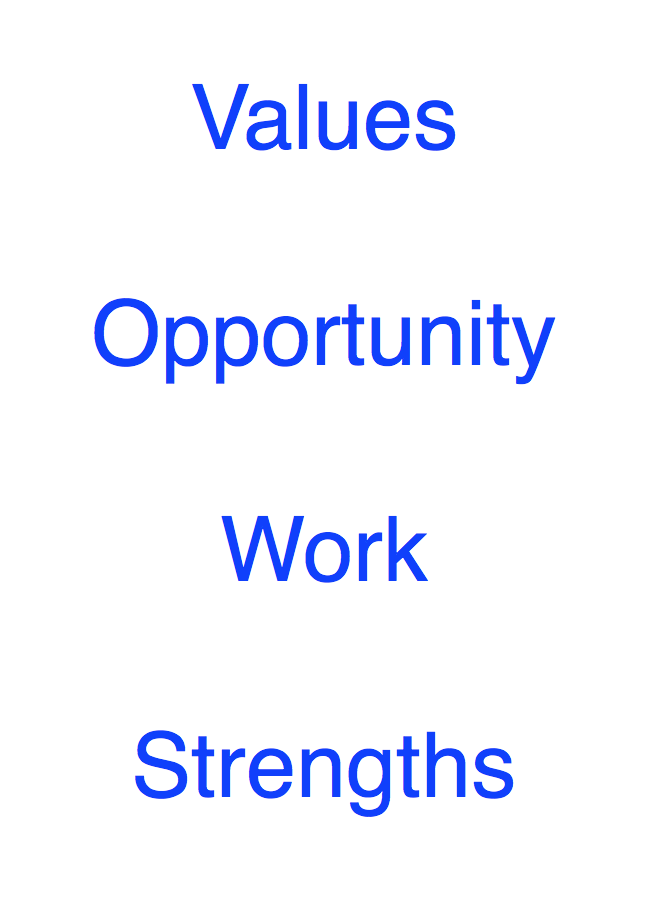
Consider the acronym VOWS - values, opportunity, work, and strengths.
Values. Each of us differ in our beliefs, attitudes, and values. We may be patient or short-term focused. We may function best as leader or advisor. Our risk tolerance varies. We may be altruistic or egocentric. To function best, we must be comfortable in our own skin.
Drucker describes the "mirror test." What is my ethos? What do I want to see in the mirror? Ben and Jerry (the Ice Cream magnates) had a principle that management could only earn a certain multiple of employee wages. They felt compensation above that was obscene. Those values are not widely held.
Some leaders willingly "sell their souls to the devil." Relationships of college coaches with AAU coaches and shoe companies come to mind. Some coaches skimp on discipline to keep talented players on the court. Many trade educational values for wins. Coach Gary Williams said that he would never win a National Championship because he wouldn't sell out to club coaches for access to the best players.
As coaches, do we value existing players (e.g. upperclassmen), newcomers, or both equally?
Drucker asks whether we want to be "the richest man in the cemetery?" He says, "values are, and should be, the ultimate test."
Opportunity. We might also consider "options". Based on "how I do business" where will I fit? Do I belong in a small college or large, as an independent entrepreneur or a big company? Where do our values, strengths, and work take us. Find the right fit.
Work. "Nothing will work unless you do." That's obvious. But how do I learn, communicate, and excel? We learn by watching, by listening, by doing, by writing, and more.
Drucker mentions that FDR ("fireside chats") and Truman functioned best with verbal communication, but Eisenhower was a reader. But after becoming President, he compromised his effectiveness by adopting the style of his predecessors, which was less intuitive for him.
I'm a reader and a writer. If I watch a lecture or hear a podcast, I retain more by summarizing. My blogs reinforce learning. That doesn't relieve me from oral presentations. But we can leverage our strengths with written (e.g. slides) content. We won't work best unless we manage ourself well.
Strengths. Tracking identifies our strengths and weaknesses. For a trader, that includes profits and losses, and expectancy (outcomes per trade or dollar invested). Coaches track shot charts, offensive and defensive efficiency, assist-turnover ratios, and myriads of new age statistics.
This figure from Multunus shows "above the line" strengths and "below the line" weakness such as lack of courtesy and manners, poor communication, and competence. Play to our strengths and hide our weaknesses.
Translating industry "best practices" to coaching may not seem obvious. Heretics may believe "DATU" (doesn't apply to us). But leaders recognize that success flows from "doing more of what works and less of what doesn't."
Bonus: beat the fronted post.
Tuesday, March 14, 2017
The Season Wasn't a Dream. What Next?
"Somebody's gotta win and somebody's gotta lose." - Everyone's Mother
I can't speak for you, but we're not going home with trophies this season. To borrow a phrase from mariner Steve Callahan, sometimes "I felt as though I had a view of heaven from a seat in hell."
What are you going to say to your team after the season. I'm going to borrow some thoughts from Laurence Gonzales, author of Deep Survival and Surviving Survival.
Shivek pass and cut drill.
1. Work, work, work. Focus on your process, the nuts and bolts of improving. It's easy, but not sufficient, to dredge up "there's always somebody else who's in the gym right now." When our work doesn't match our dreams, frustration ensues. Unhappy with your grades? Do the work. Disappointed in your performance? Work your craft.
2. Be here now. Play in the moment. Play present. Next play. Focus completely on the task at hand. Don't look at me if you miss a shot (or make one). "Do the next right thing right." Don't focus on the officiating, your parents, or your friends in the stands. Win this possession...over and over.
3. Be tough. Brad Stevens says, "the game honors toughness." Jay Bilas shared humiliation as a freshman at Duke when he didn't go to the floor for a loose ball. He distinguishes the 'false hustle' chest-thumping toughness from authentic actions belonging to tough players.
4. Touch someone. Premature babies in nurseries grow faster and go home quicker when they're touched and massaged. Humans are social animals. We need to express and feel our humanity. Teams 'in touch' perform at a higher level. Share the fist bumps and high fives liberally. Let your teammates know that you're there for them. Excellent teams radiate joy.
5. Be grateful. John Donne wrote, "no man is an island." As teammates, embrace a community greater than ourselves. Gratitude is part of Don Meyer's core values - passion, unity, thankfulness, humility, and servant leadership. Everyone likes to be appreciated. Share your gratitude.
If players want to make a difference, they must become different. We can help. Above all, "two is one and one is none" is about people. Inspire someone.
Monday, March 13, 2017
Whatever It Takes (The Mindset of a Champion)
Laurence Gonzales wrote Suriviving Survival, providing suggestions for recovering mentally from crises.
Number eleven is "Whatever it takes." He notes, "Do whatever is necessary to make that move happen. You are determined. You know that you have the will and the skill."
This is the career per game summary of a three-time NBA champion. After three mostly forgettable seasons with the Celtics, he went on to the Spurs. He led the league in three-point percentage in 2002-2003 and pioneered the "three and D" role. He was an eight-time NBA all-defensive team. Bruce Bowen did "whatever it takes" to become a contributor on a champion.
Bowen knows his "ABCs."
Bowen got in the head of some of the best offensive players in the NBA. He played an aggressive, physical (some said dirty at time) defense that established his reputation as a top NBA defender.
For podcast fans, Dr. Amber Lattner interviews Bowen. How does our brain work and how can we use it to achieve high performance?
"Mentally tough individuals...have a firm sense of awareness..." We can train ourselves to free up our conscious self (awareness) where previous skills have relocated to the subconscious.
Basics of awareness:
- physical awareness (great professionals are aware of their status - energy)
- mental awareness (thoughts affect emotion that affects our physical self, positive thoughts stimulate positive emotion that favors positive performance)...negative thoughts produce increased muscle tension, faster heart rate, and narrower visual field
- emotional awareness (influential people control their emotion and use them as feedback)...men tend to have a smaller spectrum of emotions than women
- situational awareness (decision appropriateness demands understanding choices in time and space)
Dr. Lattner emphasizes the importance of "calling the audible". Do whatever it takes.
Mindset Note: B.O.W. = BEING OPTIMISTIC WINS!
Number eleven is "Whatever it takes." He notes, "Do whatever is necessary to make that move happen. You are determined. You know that you have the will and the skill."
This is the career per game summary of a three-time NBA champion. After three mostly forgettable seasons with the Celtics, he went on to the Spurs. He led the league in three-point percentage in 2002-2003 and pioneered the "three and D" role. He was an eight-time NBA all-defensive team. Bruce Bowen did "whatever it takes" to become a contributor on a champion.
Bowen knows his "ABCs."
- Active hands
- Balance
- Contest shots
- Diversion and denial
- Effort
- Footwork
Bowen reinvented himself during his career. From a journeyman, he became a champion as he develop a niche as a top NBA defender.
Bowen got in the head of some of the best offensive players in the NBA. He played an aggressive, physical (some said dirty at time) defense that established his reputation as a top NBA defender.
For podcast fans, Dr. Amber Lattner interviews Bowen. How does our brain work and how can we use it to achieve high performance?
"Mentally tough individuals...have a firm sense of awareness..." We can train ourselves to free up our conscious self (awareness) where previous skills have relocated to the subconscious.
Basics of awareness:
- physical awareness (great professionals are aware of their status - energy)
- mental awareness (thoughts affect emotion that affects our physical self, positive thoughts stimulate positive emotion that favors positive performance)...negative thoughts produce increased muscle tension, faster heart rate, and narrower visual field
- emotional awareness (influential people control their emotion and use them as feedback)...men tend to have a smaller spectrum of emotions than women
- situational awareness (decision appropriateness demands understanding choices in time and space)
Dr. Lattner emphasizes the importance of "calling the audible". Do whatever it takes.
Mindset Note: B.O.W. = BEING OPTIMISTIC WINS!
Subscribe to:
Posts (Atom)