Total Pageviews

Tuesday, August 27, 2019

The Price of Leadership


Leaders balance communication, evaluation, development, fairness, and management of teams. 

Leaders have difficult conversations. Leaders tell the truth, hear the truth, and take the truth. Hard conversations inform role (or lack), discipline, and can inspire anger and envy. They come with the job. 

Leaders connect with players and teams, add value, and get buy-in. They get full engagement from teams. 

When Bill Russell played for the Celtics, he and Coach Red Auerbach had a private agreement that Auerbach could yell at Russell any time. Because if he could yell at Russell (future 11 time NBA champion, 5 time NBA MVP), then he could yell at anyone. 

Leaders model Greek influences (ethos-character, logos-reason, pathos-emotion), because players deserve that. "Players don't care what you know until they know you care." 

Leaders understand that players who "do more become more and become more to do more." 

Leadership isn't a popularity contest. And a leadership position isn't achievement. Our actions define us. Players and families will disagree with assigned roles and playing time. As a coach, I recommend that players (not their families) ask coaches directly how they can improve, contribute to the success of the team, and increase their role. 

According to twenty-plus NCAA Championship soccer coach Anson Dorrance (UNC), girls sometimes are reluctant leaders. Dorrance says some of his players don't want to be considered "bossy" or worse. That dilemma comes with leadership; leaders own being the hardest workers, biggest sharers, most consistent givers on the team. 

There is always a price to pay. The price isn't the same for each of us. Everyone can be a great teammate; not everyone will be a primary leader but everyone can lead better. What price will you pay? 

Lagniappe: 


Our local volleyball team has had tremendous success...innumerable league titles, eight sectional championships in sixteen years, and a state championship. Here's one of my favorite images from the 2012 title run. The EYES have it. 

Lagniappe 2: brilliant BOB via @BBallImmersion


Monday, August 26, 2019

Free Throw Attack

Diversify our offensive attack by using free throws to initiate the fast break.

Priority 1. Prevent offensive rebounds. 
Priority 2. Take care of the basketball. 
Priority 3. Transition attack. 


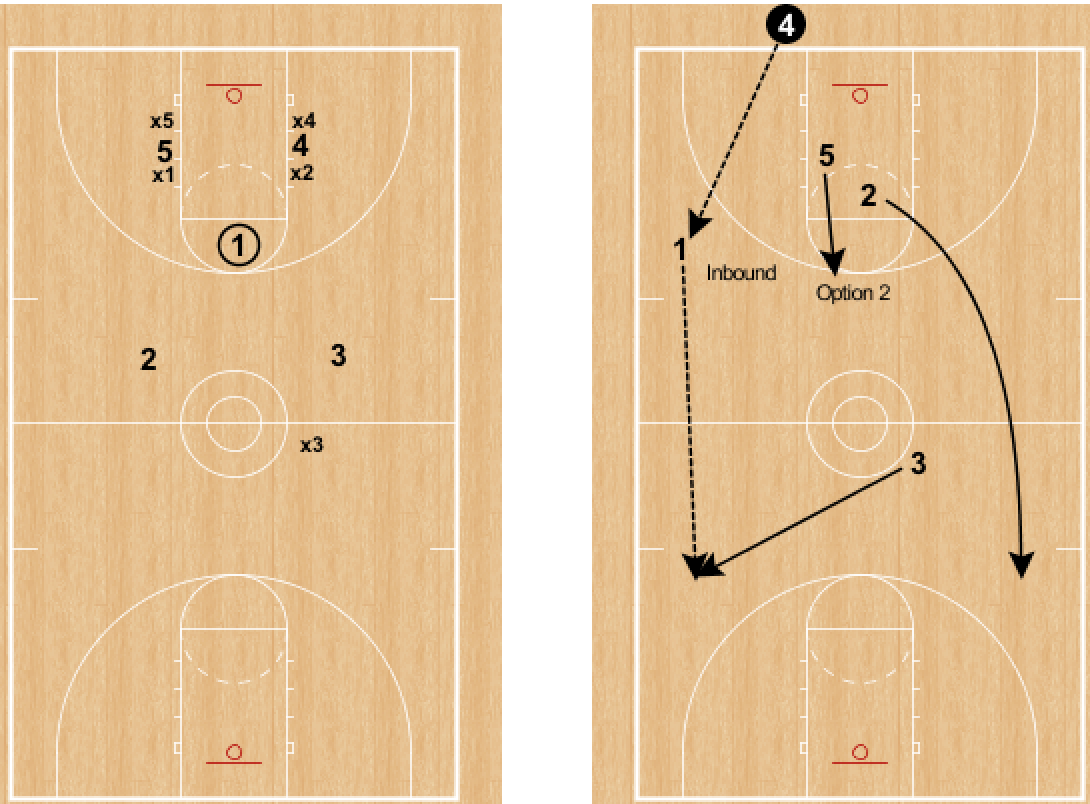
One schema for transition offense with 3 a player with good hands and capable finisher. 


Drill for same. 


What ingredients are necessary? 

  • Will to run
  • Conditioning
  • Consistent rebounders
  • Finishers 
MSU Coach Tom Izzo has free throw counterattacks. 


We don't have the practice time to implement more complexity. 

Lagniappe: How do we increase our points per possession? I don't know whether a free throw attack offense will generate enough layups or successful free throws to make it worthwhile. Preseason tournaments may provide an answer. Employ a proven calculus when implementing new ideas. 


Sunday, August 25, 2019

Basketball: Mini-Clinic

"Good artists borrow; great artists steal." - Picasso 

I've stolen Picasso's line a thousand times. You should, too. 

There aren't "ten best" tips to share, but certainly ten worthwhile ones. Find individual actions that foster or prevent scores. With many games decided by few possessions, a few possessions inform outcomes. 


1. "The ball scores." Five players defend as one. Some players wear "blinders" focused on stopping their assignment and forget to help.  


2. All transition is not created equal. Our goal is to get the second pass over half-court. We need a mindset and commitment to play fast. Secure the rebound. Outlet guard above the free throw line, back to sideline to open visual field. Run wide. "Basketball isn't a running game...it's a sprinting game. 


3. "Don't go there." Make life hard for defense by cutting hard, moving the ball quickly, and moving without the ball. Avoid primary trap zones that beg double teams.


4. "Run similar actions from different formations and different actions from the same formation." 

5. Practice special situations every practice. O-D-O (offense-defense-offense) lends itself to practicing free throw offense and defense, BOBs, and SLOBs. 

6. Practice "must score" actions at a minimum including best BOBs, best SLOBs, best Man-to-man, and best Zone set. 

7. Pop says "Technique beats tactics." We don't go back to basics. We never leave them. Shooting is a highly perishable skill. To score at three levels (inside, mid-range, perimeter), practice at three levels. 


8. Be on target. In A Sense of Where You Are, John McPhee shared a Bill Bradley free throw shooting tip. Bradley aimed at the center of the four bolts that held the goal to the backboard. "More than seventy colleges tried to recruit him, nearly all of them offering him scholarships. Instead, Bradley chose a school that offered him no money at all." If a player struggles, consider refocusing their target.

The target worked for him. Bradley made fifty-seven consecutive free throws as a freshman at Princeton. 
9. Layups, layups, layups. We can spend an hour on layups. Layups by the bushel (above). Remind players of Kevin Eastman's admonition, "eyes make layups." 
10. "Fall in love with easy." As Pete Carril shares, "the quality of passing informs the quality of shots." 

Lagniappe: Chris Oliver (@BBallImmersion) with a 1-4 action and a tough finish. 


Saturday, August 24, 2019

Are Our Basketball Values on the Same Wavelength?


Bill Parcells says, "you are your record." Maybe in the NFL, but really we are our work - the sum of mental and physical effort. 

I went to the park and shot some hoops, alone. An Asian kid, maybe ten, came along working the craft. His Mom watched from the sidelines. He did okay, but I explained that I coach and could show him a couple of things. So I shared hand position shooting the ball and simple box drills with pivoting teaching to get separation. He did a great job incorporating the skills; sharing gave me some satisfaction. Win-win. Share, teach, learn. 

What are our teams' values? Have they ever thought about it? Have we asked them? 

Chuck Daly reminds us, "I'm a salesman." We could generate some massive list (e.g. Eastman *Bility Branding) but how about a short list of values to buy into?

Get ideas from corporate America. Starbucks has the acronym LATTE. 
  • Listen to the customer. 
  • Acknowledge their issue 
  • Thank the customer for sharing it. 
  • Take care of the problem.
  • Explain the problem and solution to coworkers. 


Ford preached, "Quality is Job 1." Southwest is "the low cost airline." We immediately recognize "the Energizer Bunny." We work to be TIA, not thanks in advance, but "Teamwork, Improvement, Accountability." 

Seek understanding not validation. Investment manager, Vitaliy Katsenelson shares a quote from Dale Carnegie about winning arguments. "You can’t because if you lose it, you lose it; and if you win it, you lose it. Why? Well, suppose you triumph over the other man and shoot his argument full of holes and prove that he is non compos mentis. Then what? You will feel fine. But what about him? You have made him feel inferior. You have hurt his pride. He will resent your triumph." If we have to be "right" all the time, we choose to be unhappy.

Influence our team's mindset to be "do the work." Take care of what we control at home, in the classroom, on the court. Katsenelson informs us, "When our values are internal and process-based, then we are in the driver’s seat of the bus." Share great values. 

Lagniappe: via @John_Leonzo  Dribble pitch into hammer screen. 


Friday, August 23, 2019

Basketball: Develop a Specific Editing Process and Lagniappe Zone Offense

Pursue perfection and earn excellence. Constantly reevaluate possessions. Develop a process of consistency and specificity. 

A blend of objectivity and subjectivity confers advantages. Set criteria to filter offensive actions possession by possession. What went well? What went poorly? What can we fix? 

Process/Outcome matrix from Farnam Street

Step 1. "Wrong at a glance"...e.g. inattention, low effort, bad spacing, "shot turnovers"  
"DUMB BASKETBALL" 

Step 2. Missed opportunity...open passes not made, turnovers, mediocre shot quality
"DO IT BETTER"

Step 3. Acceptable...proper spacing, good vision, passes executed, better shot quality
RIGHT DIRECTION

Step 4. Desirable...crisp cutting, screening, passing leading to highest quality shots ("easy shots") WHAT WE WANT

Track each possession. "What are we trying to accomplish?" If we can't discern intent, there probably isn't any. Purposeless play drives me batty. 

  • Organization of each play
  • Options available
  • Decisions in the context of options
  • Execution of cuts, screens, passes, shots
Play intentionally. Encourage "hard to guard" opportunities like pick-and-roll, mismatches, closeouts, various off-the-ball screens (screen-the-screener, staggered screens, Spain pick-and-roll).  

Finish quality opportunities (layups and putbacks, open drives, free throws, open shots.)

We can't control outcomes but control practice of executing fundamentals and implementing better choices. 

Lagniappe: I've recently shared some UCONN zone offense run through the high post and related actions for high low run by Syracuse's Jim Boeheim. 


Via @RadiusAthletics. Here's video from Oregon emphasizing ball movement with quick passing and selected penetration by passing or drawing 2. Running plays through Sabrina Ionescu has merits. Note the '2 second rule' of catch, decide, pass. And Oregon has finishers. 


Thursday, August 22, 2019

Vaping and High School Athletes

Vaping is unsafe, to be condemned as a wolf in sheep's clothing.

What is vaping? Vaping is "the action or practice of inhaling and exhaling the vapor produced by an electronic cigarette or similar device." A vaping pod/cartridge can contain the same amount of nicotine as a pack of cigarettes. 

How many high school students are vaping? According to the National Youth Tobacco Survey, e-cigarette use has increased dramatically. "From 2017 to 2018, current e-cigarette use—defined by use on at least one day in the past 30 days—by high school students increased 78 percent, from 11.7 to 20.8 percent, accounting for a troubling 3.05 million American high school students using e-cigarettes in 2018." Surely, the number has risen much higher. 

What are some risks of e-cigarettes? The products are:

  • HIGHLY ADDICTIVE
  • decrease attention span
  • contain carcinogens (cancer-causing components like volatile organic compounds) 
  • impair blood flow
  • cause a variety of lung problems
Severe lung disease including cough, shortness of breath, fever, vomiting, and diarrhea have been seen among midwestern teens. Some patients required hospitalization, including time in intensive care. Over 150 cases have been reported to CDC including multiple patients requiring life support. It is not known which products are the principal causes or whether contaminants are contributing. 

Research in cell and animal studies indicate vaping reduces immunity, can worsen atherosclerosis (hardening of the arteries), and induce behavioral changes in mice. 

Nicotine vaping is harming student athletes by causing symptoms of cough, wheezing, and shortness of breath and worsening asthma in some. Obviously breathing symptoms diminish athletic performance. 


Vaping device injuries can cause burns or confined explosions. It's estimated at over 1000 injuries nationwide. I had an adult patient who had leg burns from a device that caught fire in his pocket. 


Here's an image showing dental and jaw fractures from a vaping device. 

FEMA describes vaping devices as a new and unique hazard

There are very few studies of longitudinal effects of vaping on respiratory symptoms and lung function in regular users of electronic cigarettes. One Italian study of NINE regular users for at least (median) eight months didn't show significant changes. This is a poor study with seven of sixteen participants lost to followup or excluded. It also "selects" for patients who didn't quit because of health problems.  

A survey of University students examined the association of vaping and mental illness. "Those who used e-cigarettes were significantly more likely to have mental health histories of attention-deficit/hyperactivity disorder, post-traumatic stress disorder, gambling disorder, and anxiety, to report low self-esteem, and to endorse traits of impulsivity." Vape users were also more likely to use illicit drugs. 

E-cigarette sales to minors are illegal in Melrose. 

Summary: 
  • Electronic cigarettes most commonly deliver inhaled nicotine with one cartridge equivalent to a pack of cigarettes. 
  • Nicotine is highly addictive; adolescents are highly susceptible. 
  • Vaping can cause respiratory symptoms (cough, wheezing, shortness of breath), worsen asthma, and cause severe lung injury.
  • Device failures can cause burns, dental, or mouth and face injury. 
  • Vape users surveyed are more likely to have associated mental health issues and illegal drug use
Vaping isn't safe. Vaping isn't cool. Vaping isn't for winners. 


Wednesday, August 21, 2019

Basketball, Teens, and Sleep


We spend about a third of life sleeping. Sleep deserves more attention. High quality sleep improves cognitive performance, quality of life, and emotional stability. 

Sleep is essential for learning, memory, attention, and decision-making. 

Physiologic loading, travel, anxiety, and competition can all interfere with sleep duration and quality. Young athletes also face academic pressures and time demands  encroaching on available sleep time. 

"Students with less sleep and higher reported levels of sleepiness generally have lower grades and alertness."

A Stanford study in basketball players who extended sleep showed sprint times reduced by an average 4.5%. Both free-throw and 3-point shot accuracy significantly improved by 9% and 9.2%, respectively. Sleep better, play faster and better. 


Younger adults normally need 7 to 9 hours of sleep and teens 8 to 10 hours. Britain's National Health Service has practical recommendations for sleep hygiene: 

Alcohol impairs sleep in teens, as well as affecting brain development, memory, reaction time, and coordination...all big negatives for athletes. Marijuana may impair sleep onset and cause excessive daytime sleepiness

Mindfulness can also help teens sleep better

Summary:
  • Teens need more sleep.
  • Competition, travel, and stress all worsen sleep.  
  • Poor sleep produces both physical and mental deficiencies. 
  • Basketball players improved speed and shooting with longer sleep. 
  • Better sleep environments are possible (sleep hygiene).
  • Mindfulness is a zero cost technique to foster better sleep. 
  • Alcohol and marijuana worsen sleep and teen cognition.
Lagniappe: 


Via @PickAndPop.Net Steve Nash reads defense, slows the game down, is patient, and executes. 

Tuesday, August 20, 2019

Crafting and Leading a Team

Coaches build and lead teams. Balance between guidance and dominion. Individual creativity requires freedom within structure. Slaying dragons (Jabberwocky) isn't all work and no play. 

Help the team tell their story. Give them reasons to engage, to share, to push each other. That creates issues for young players...confidence and maturity to lead without perception of selfishness, arrogance, or intimidation. "Play for the girl next to you."


Stained glass tribute to master Bill Dodds. 

"There is no leader without a team." Leaders derive influence from the team. Reciprocity, liking, and process (trust is gradual) matter. Social proof also impacts acceptance of authenticity and craft. There's an "I know it when I see it" dimension to leaders. 

"Why's not Zed." Reasons accompany actions. "They're not cattle." Basketball demands conditioning. We condition within drills or scrimmaging (usually O-D-O)...offense-defense offense. Edit out drills that accomplish nothing. 

Give and get feedback. Players crave knowing where they stand and why. We're all limited...by size, athleticism, skill, intelligence, game knowledge, emotional vulnerability. Excel because of what you can do rather than fretting about what you can't. 

Fairness isn't always equal. If a player had greater summer participation than all others, she deserves commendation and opportunity. Players have good reasons for availability (family, other activities, other sports, illness, etc.) but praise the praiseworthy. Reward commitment. 

Constantly assess what our team needs. What does our team need NOW? Are we on the same page? Do we need more practice or more rest? Do we need more consistent effort, more skill, better teamwork? 

"Leaders make leaders." Give players chances to lead. Assign brief (two-minute) topics like "how we defend the pick-and-roll," "reading screens," or "free throw rebounding." Have a leader for warmups or drills. Ask players how they think the team can improve. 

"Are you building a program or a statue?" 

Lagniappe: 
Lagniappe 2: how much switching is right for us? Can we communicate well enough? 


Zak Boisvert breaks down one of the GSW switching techniques. 

Monday, August 19, 2019

Basketball: Fast Five - Stop and Smell the Roses (Mindset Power)

Eighty-five year-old to me once during an office visit, "All of a sudden I got old." 

Life races by. Capture the moments. 

Attitude is our choice. Read Jon Gordon's The Positive Dog. Or even read a summary“One of my favorite ways to change the story you tell yourself is to say get to instead of have to." Work, coaching, study, and struggles are privileges not givens. 

Take Shawn Achor's 21-day Happiness Challenge. Achor is an educator at Harvard. Write down three items nightly that you're thankful for. After 21 days you've compiled 63 gratitude chips to access your attitude of gratitude


Invest time in Mindfulness to invest in yourself. Read Meng Tan's Search Inside Yourself, examining the science and practical benefits of training our mind. Reduce stress hormones, sleep better, decrease anxiety, depression, and blood pressure, and improve memory and concentration through change in brain structure and function (neuroplasticity). Mindfulness reduces thought wandering and decreases activity in the 'stress center' of the brain, the amygdala. 


Dot B. Stop and take a breath. Even one mindful breath daily beats nothing.


Fill the Jar of Awesome.  I have a Jar of Awesome. You should, too. 

Lagniappe 1. And another bonus of mindfulness, higher Standardized Test Scores, possibly through improved attention. 

Lagniappe 2. Got a dominant post? Two BOBs from @HoopsSean
Lagniappe 3. "Get in the gym." Yesterday, I worked (outdoors) with a high potential youngster including areas we haven't worked on: 

  • Upfake with side-dribble shooting (against hard closeouts)
  • Reverse Mikan drill including finishes with spin off the backboard
  • Directing offense through the high post (quick shots, high-low, and ball reversal) 


Sunday, August 18, 2019

Basketball: Managing Injury Risk


"Basketball isn't a contact sport; it's a collision sport." 

Risk is inherent with many activities. Mitigate risk by asking "what if" and following through. Here's a quick overview with some references provided. I label opinion as such. 


Adventure photographer Jimmy Chin (his Alex Honnold cover above) uses the equation:


CONSEQUENCE x PROBABILITY = RISK

In Deep Survival, Laurence Gonzales describes snowmobilers who ignore AVALANCHE (sign) warnings and fly up the side of a mountain. The consequence of entrapment in an avalanche was death and the probability was real. 

Share the message that we care by emphasizing safety with players and families. In basketball activity, we can spot and reduce risks. 


ENVIRONMENTAL
SURFACE
PLAYER
PLAY 

Environmental. We don't live in the Neanderthal "water makes you weak" era. Understanding that players experience risk from dehydration to heat injury allows us to set guidelines. 


Keep it simple. Use the chart above from the National Weather Service and NOAA. Risk rises dramatically at the interface of temperatures of 88 degrees and above with relative humidity of fifty percent. This doesn't account for asphalt effects with outdoor courts. I don't think practicing at anything over 88 degrees makes sense and near that limiting running matters. Players need to bring plenty of water and get regular breaks. 

Surface. Likewise, if courts are wet, anything more than walking (cutting, running) carries unacceptable risk. 

Player factors. It only makes sense that the more 'exposures' or hazards undergone, the greater the potential for risk (by increasing the probability). I don't think this is simple linear probability. The New York Times informs us about risks in growing athletes, enhanced by overuse, dehydration, vitamin D deficiency, impaired nutrition, lack of recovery, and single sport play. Vitamin D deficiency is high worldwide


I take vitamin D supplements periodically. Do you? 

Injuries. Most coaches are required to receive and demonstrate concussion education familiarity. The CDC offers free online concussion education via their HEADS UP program. 

Basketball places athletes at risk via numerous exposures. There's a suggestion that mouthguards may prevent or reduce the severity of concussions. On balance, I think they make sense, even if the benefit is small. 

Dynamic stretching has value. Studies show that "In contrast to static stretching, dynamic stretching is not associated with strength or performance deficits, and actually has been shown to improve dynamometer-measured power as well as jumping and running performance." Additionally, "dynamic stretching may be better suited for athletes requiring running or jumping performance during their sport such as basketball players or sprinters."

Studies of taping ankles show a lack of durable limited ankle range of motion. Lace-up ankle braces reduce ankle injuries. I share two quotes below. 

"The rate of acute ankle injury (per 1000 exposures) was 0.47 in the braced group and 1.41 in the control group (Cox hazard ratio [HR] 0.32; 95% confidence interval [CI] 0.20, 0.52; P <.001)."

"Use of lace-up ankle braces reduced the incidence but not the severity of acute ankle injuries in male and female high school basketball athletes both with and without a previous history of an ankle injury."

Drills. I do not teach Euro step because I have concerns about knee injuries in girls. We do not teach players how to take charges via drills or use contact layups with pads for similar reasons. 

Game play. When I speak with officials pre-game, I ask them to keep the players safe. Some coaches and programs don't emphasize good technique and continually set illegal backscreens or moving screens that put players at risk. I prefer to think this is from lack of knowledge than malevolence. 

Lagniappe: via Chris Oliver @BBallImmersion  Zone overload action. 

Saturday, August 17, 2019

Basketball: Video Breakdown UCONN Women Zone Attack


Leverage talent and teamwork and quality possessions emerge. Spectacular video from Radius Athletics. 


UCONN's core plan is scoring a third in transition, a third on threes, and a third from set plays

This video first illustrates how UCONN initiates its zone attack versus the 2-3. Some coaches like two players below the zone, flashing "invisibly" into gaps. I hope our players can learn both this year. Obviously, with elite post and perimeter players, life is good in Storrs. 


The video emphasizes three "easy actions" from their zone high post attack -

1. Elbow jump shots 
2. High - low action
3. Ball reversal for three point shots 

UCONN cultivates unselfish play and ball movement with elite players. The rest of women's basketball is catching up.

Lagniappe: from Gibson Pyper
Key reminders -
1. You want to be a scorer? Find four ways to score.
2. Have a "Go to" and "counter" move as a minimum. When a player can't explain what their GO TO and COUNTER moves are, she doesn't have them. 
3. An afternoon in the driveway or park isn't going to make them. I think it was Kevin Eastman who said, "10,000 hook shots can earn you 10 million dollars." 
4. Dream big. Work bigger. 

Friday, August 16, 2019

Basketball: Chin Up, Adventure, Basketball, Lions, and Gazelles


"The best types of shoots are the ones where you're having fun." - Jimmy Chin

Elite adventure photographer Jimmy Chin shares his approach at MasterClass. I am literally the world's worst photographer, but a solid brain thief. Chin informs that the impossible becomes reality, illustrated by his work Free Solo

Chin's process involves - concept, pitching, execution, and editing. Basketball overlaps these. 


“Every morning in Africa, a gazelle wakes up, it knows it must outrun the fastest lion or it will be killed. Every morning in Africa, a lion wakes up. It knows it must run faster than the slowest gazelle, or it will starve. It doesn't matter whether you're the lion or a gazelle-when the sun comes up, you'd better be running.” - Christopher McDougall

Concept. What's our worldview? Compete...to become the faster slow gazelle or fastest lion. Expand your vision, decisions, and execution within teamwork and accountability. Become a better teammate starting with your "first team" - family. Be accountable for effort and collaboration with the girls next to you. 

The Pitch. We consistently teach a value hierarchy - family, academics, extracurriculars... the same values my coach taught fifty years ago. I'll never tell you that basketball is more important than grandma. If you're sick or injured, get better. It's not the WNBA. Show us excellence in the classroom and we trust you to become your best on the court. 


Execution. Basketball comes without guarantees. Define, learn, and refine more actions well; the execution (and score) begins to take care of itself. For example, at a recent practice, I worked with a rebounder on catching the defensive rebound, pivoting away from the middle, and delivering a two-hand overhead pass (thumbs down, fingers out) to the guard above the level of the free throw line. Why? Because it wasn't good enough. Will she do that in a game? I don't know. If she doesn't, then work more. It's not rocket science. 

"The picture is made in the editing room." - Ron Howard


Editing. Coach Wooden's EDIRRRRR (explanation, demonstration, imitation, repetition x 5) only works when the repetition informs better edits. Most of us need editorial guidance (mentoring, coaching) because of contentment and distraction. And few exceptional players embrace criticism "have you tried ________?" If you practice "box drills," do you focus on mediocrity of the lot or excellence of a few? Are you tracking? 


Challenge yourself (edit) with time, records, competition against a partner. 

Recap: Whether it's basketball or biology, soccer or sociology, have a concept, a pitch (plan), measure execution, and edit. If you want to make a team, find a role, and expand it, goals aren't enough. The magic is in the work

"You have to be able to deliver what they want, not what you think they want." - Jimmy Chin 

Lagniappe: BOB Beauty from @BBallImmersion shares a TRAFFIC JAM

Lagniappe 2: Chin says, "Great editors are brutal." On a shoot, he takes 35 to 40 THOUSAND images. He and an editor (e.g. National Geographic) each select 500 to 1000 usable pictures. They cross-reference those to 35-50 and make final hard choices to get to the 15 to 20 that survive into the magazine. Find your best stuff. 

Lagniappe 3: If you had to show one action to represent your basketball life, what would it be? Mine would be diving to secure a loose ball, an extra possession. "The ball is gold."

Be a brain merchant every day.