Total Pageviews

Sunday, April 16, 2017

Combine Multiple Actions to Develop Offense (Introduction)

Imagine that space aliens (middle schoolers) arrive and we're assigned to teach basketball offense. Their size and athleticism vary, and they commit to build physical and mental skill. They are willing learners, focused, and fully engaged. Where do we begin?

Instill core offensive values

"Play hard, play smart, play together." 
"Maximize every possession." 
"Basketball is a game of cutting and passing." 
"Movement kills defense.
"Get quality shots."
"Value the ball. Take care of the ball. The ball is gold." 


We teach players individual and small group actions. Combine them in different ways to generate quality chances. We know which actions challenge defenses...do more to stress the defense. 

Better fundamentals accelerate offensive development. Structure actions to test ball containment, defend the post and the perimeter, to defend ball and off-ball screens, to challenge cutters, and close out. 

Determine what works for your personnel and personality. Inform players that skills dictate whether they're scorers, facilitators, or screeners. "Become more to do more; do more to become more." 

We haven't had any size, so we structure offense away from the basket and need to excel in the middle of the court. I don't see that changing. Develop actions on both sides of the floor, to get paint touches and ball reversal. Get everyone involved to the degree their skills permit. 

Simplify the game. 

What core elements belong for our aliens?

Give-and-go. 
Back cuts.
Pick-and-roll. 
Ball reversal.
UCLA and shuffle cuts.
Off-ball screens (limit implementation early on)
    -back, cross, down, diagonal, elevator, flare, stagger, loop 
Flex cut.
Screen-the-screener.

Give and Go. Players "not involved" must learn RELOCATION into passing lanes. 


Ball reversal. 


"We do what we do and we do it together." Our knowledge is only one lever to pull. 

Bonus: understand what motivates - money, power, success, status, and occasionally higher aspirations...


"Why did we fail to achieve something?" We stake a claim on missing resources (which may be true). Robbins argues the key is to maximize our resourcefulness and tap into emotion. 


Saturday, April 15, 2017

Fast Five: What Would My Dog Say?


First, I don't have a dog. So, in the tradition of economics, I'll assume a dog. What would "Roscoe" say about me? 

1. "He's not always realistic." Ninety percent of physicians say that they're in the top ten percent of doctors. Half of us graduated in the bottom fifty percent of our class. Eighty percent of people say they're better than average drivers. The other twenty percent? They have a higher incidence of depression. Accepting reality involves some pain. Medicine, investing, and coaching all dispense regular doses of humility and loss. 

If we're so smart, then "why don't we win all the time?" Marshall Goldsmith writes in What Got You Here Won't Get You There, "why should a smart guy like me listen to a loser like you?" Our anger, denial, and attack don't help our dog in the fight. "Are you going to give up and give in or get up and get in?"

"He didn't like puppy training or other 'paperwork'." Word. 

2. "He doesn't like confrontation." There's "the other side of the trade." Five percent of the "community" creates more than half the problems. There's a time to stand your ground, but "don't poke the bear." Suffer the fool or be one? 


3. "He believes in habit, in process." Roscoe gets let out on time, fed on time (Fantasy Freshpet), walked regularly, gets treats, his bath (whether he needs it or not), goes to the vet, and gets playtime and stroked. My imaginary dog gets better treatment than the next guy's imaginary dog. 

Maybe he's not the best imaginary dog, but he's my best pretend pooch. 


We can always do more to train our dog and ourselves. 

4. "He's a slave to improvement. He has to be." Chaser (above) knows over a thousand words. "The differences between who we are now and who we become in five years are the people we meet and the books we read." Books stimulate us to seek solutions. 
We can't control our size. Neither can players. But when we "control what we can control" we can improve process (athleticism) and competence (skill). Naturally, competence encompasses our communication, knowledge, and teaching, but also includes our discipline, inspiration, motivation, and other intangibles. 

5. "Having a dog isn't always fun." When Roscoe throws up on the rug, needs the vet, ages and slows down, or God forbid, bites someone, I wonder why I have a dog. Nobody enjoys "picking up the poop." 

I have ownership for those "turnovers", forced shots, missed shots, missed assignments, bad passes, and other assaults upon my basketball sense. They come with the territory. 

If we want to play the game, then we have to tolerate if not embrace, the "poop". 

What does your dog say about you? 

Inbounding from Basketball Immersion


Ask a player about inbounding. What are our goals and how can we best achieve them? I'm always surprised by the answers...or lack thereof. 

1) Get the ball inbounds safely. 
2) Create quality scoring opportunities. 
3) Play begins when the official hands you the ball. 
4) Misdirect the defense (use eyes, hands). 
5) Find a dependable inbounder (finding a few players to trust is easier than finding many). 

Remember the Feynman Method: 

NECS
Name it (topic).
Explain it.
Confused by it?
Simplify it. 

Basketball Immersion on Inbounding shares some tips. Here are a couple I liked:

-Know your progressions. (Where is the opportunity designed?)
-Avoid passing over the on-ball defender. (Avoid the obvious pitfall.)
-Be aware of time. (Time passes more quickly on the road...)


A UCONN BOB.

Friday, April 14, 2017

Scissors - Teaching Team Actions*

Actions come and go in all sports. Spread offenses like the West Coast Offense replace the Wing T and the Wishbone. But "old fashioned" actions, well-executed, still have a place in contemporary basketball. Anyone can find problems; leaders find solutions. 

Proper execution demands that players learn to read defenses. 

For experienced coaches, most elements are elementary. Most players will learn something here...younger coaches can generate their own ideas. 


Basic Scissors action can generate switches, confusion, and basket attack. If they generate 'corner switches' (X defense) then they can generate corner threes. 


Scissors 'read' against early switching. 


Scissors 'read' against pivot retreat. 


Scissors action against guard going under. 

*Adapted and modified from Basketball Concepts and Techniques, Bob Cousy, 1970

Thursday, April 13, 2017

Miscellaneous Concepts

A player applying a few "new" concepts daily builds a formidable portfolio of skills. Team play demands multiple players implement them. 


In transition, the cutter (2) clears her defender opening up trailer. 


5 is the 'dummy', acting uninvolved. This is similar to baseball, where an infielder dekes an approaching baserunner, pretending there is no play...only to react late and apply the tag. 


Atypical give-and-go. Pick-and-roll into "corner-elbow" give-and-go. The initial pick-and-roll pressures x3. After the pass to the elbow, x3 relaxed, and 3 gets an easy hoop. Doesn't happen? Happened to the Celtics on something similar last night.


The crafty guard dribbles at x2 setting up 2 for a cut around. We can think about this as an extended dribble handoff which is a pass. Not for the "weak" guard that can't pass out of a possible double. 


Wednesday, April 12, 2017

Constraint Department: Build in Practice Constraints

"People love what other people are passionate about." - Emma Stone in LaLa Land


We want practice to simulate play, stimulate, and develop players. Adding constraints helps make players uncomfortable. Growth accompanies leaving our comfort zone. 

How can we add constraints? Here are a few ideas. 

Time. 

Add time to a drill, forcing players to make 'X' shots in a given time or score under time limits. 


Shooting drill. Competitive...with conditioning. Usually players can take at least ten shots per minute.


Time allotted to score: ten seconds. 3 has to get open (curl, backcut, bump) off either low screen and action is live upon 1 receiving the ball. Even if 4 and 5 aren't scorers, they become screeners to help your scorer. All players can score within the ten seconds. 

Space. 

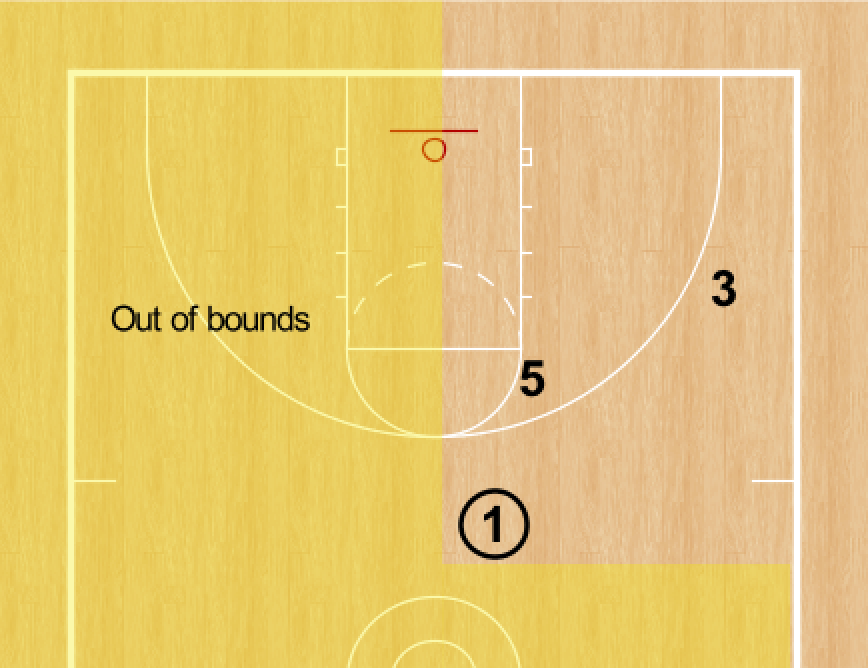
Players go 3-on-3 within a confined space. The help-side is disallowed. Add time limits to challenge both space and time. 

Game Play

We can control players' actions in many ways.

1) 4-on-4 half court no dribble, a Bob Knight favorite.
2) Limit the number of dribbles (e.g. nobody can have more than two).
3) Constraints before shooting (e.g. paint touch, ball reversal, number of passes)
4) Must screen (or slip) before shooting. 
5) Layups only. 
6) Score within the paint only.
7) Ball into the high post every 3 passes. 
8) Vary officiating (loose or tight). 
9) Situation drill (North Carolina 86-80, overcome six point deficit with 3-4 minutes to play)  
10 Advantage-disadvantage (e.g. 5 on 7, 4 on 3)
11 Force ball to be advanced only (back passes = turnovers)
12 Send off player for a turnover (during scrimmage, penalty lap)
13 Shot selection scoring (e.g. layup 2, open shot 2, forced shot 0, turnover -2)

Initiating action.

We start short scrimmages (offense-defense-offense) off a variety of setups. 

1. Free throws
2. Baseline out of bounds
3. Sideline out of bounds
4. Change of possession - scripted rebounds, turnovers", blocks 
5. "Change" coach blows whistle, player must drop ball and defense becomes offense.

Only our imagination limits us. 

As coaches, we create "our world" and teach players to succeed within more challenging environments. 

The Hero's Journey is never easy; it shouldn't be. You have to give your dream everything to succeed. 

Tuesday, April 11, 2017

Overcoming Information Overload, Attention Deficit

"What information consumes is rather obvious: it consumes the attention of its recipients. Hence a wealth of information creates a poverty of attention." - Herbert Simon* 

Lagniappe first: 


Ball reversal into reverse action. 

How we go about our business matters. Buffalo Bills coach Sean McDermott demanded, "That’s what it gets back to in terms of earning the right to win. How we meet, how we talk, how we work out, how we practice when we do practice, how we play – that’s the standard we’re trying to get to every day.”

We want higher productivity, but struggle with "choice architecture." How we structure our environment (or how it is presented) impacts our choices. When we go to the store, where do we find the merchandise? Most retailers display high-priced commodities favorably versus the store brand (lower cost, lower margins)? In the buffet line, where are the healthier items versus the fattening ones? 

When we structure practice, where do we schedule high versus low-intensity activities, drills versus teaching, individual versus team domains? 

Several years ago, I wrote an e-book, The Simple Guide to Girls' Basketball: The Game is for the Players. The work to benefit ratio weighed heavily on the work side because I wanted pragmatic information on every page. 

That experience reduces my intent and enthusiasm about completing my second basketball book. Writing is time consuming and I understand why the 'generic' reader would choose a "name brand" author. 

That said, I have read basketball books written by well-known coaches (two who have won national championships), that share almost nothing about their basketball philosophy, insight, or methods. And I'm not talking about Jay Wright, whose book I haven't read. Pete Newell, Dean Smith, and John Wooden wrote numerous books...all about basketball, not primarily about themselves. 

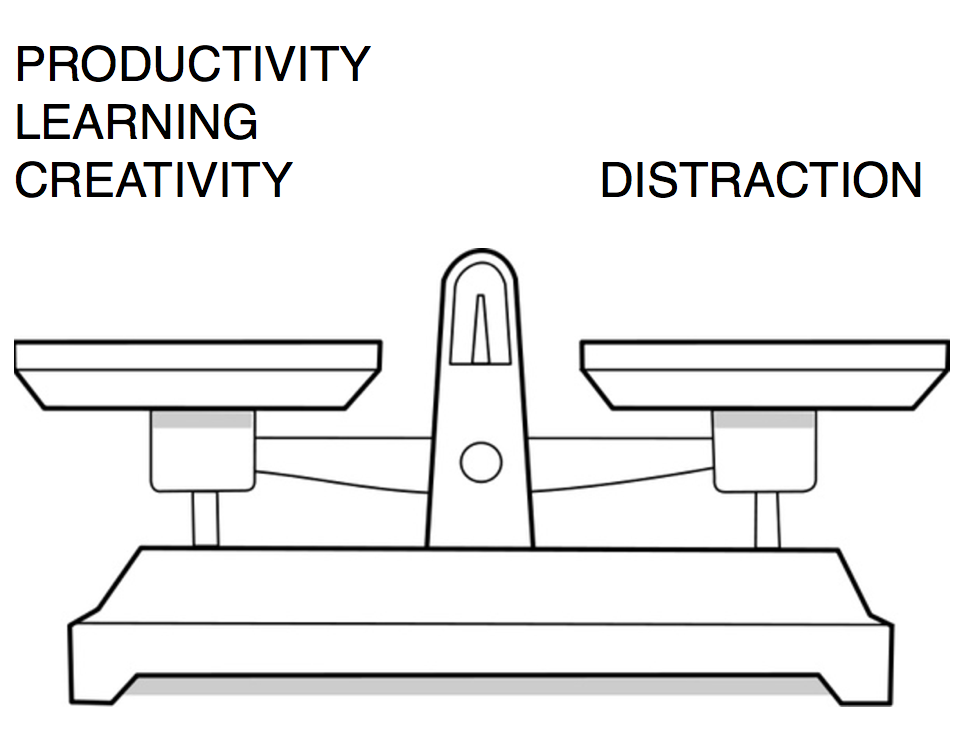
We can limit "directed attention fatigue." We deceive ourselves believing that redirection to email, Facebook, or multitasking don't impair concentration and productivity. Sleep, breaks, and nature all restore attention. Natural environments may restore emotional well-being better than synthetic ones. 


How can we rebalance the productivity scale? 

1. Schedule productive time and work in a non-distracting environment. 
2. Deny distractions (e.g. email, Facebook) by 'turning down' the noise.
3. Schedule breaks. Our attention wanes. Few people can work more than ninety minutes without requiring a break. 
4. Exercise  "Recent experimental research indicates that both acute and chronic aerobic exercise promote children’s executive function."

To accomplish more, we need an enhanced process, the preparation before the preparation. 

*Concepts derived from Manage Your Day-to-Day by Jocelyn Glei. 


Monday, April 10, 2017

Fast Five: One-on-One Drills

Success begins by winning one-on-one battles each possession. "Do more to become more; become more to do more."

"Repetitions make reputations." The offseason is here for players and coaches. Get better or get left behind. Apply constraints and competition. 


Hubie teaches one-on-one.


Attack and closeout into one-on-one. Half-court closeout, offense and defense. 


USA basketball. 


4 Dribble limit from half court. 


Great video with game-like conditions...reading, reacting, getting separation, finishing. 


Constraint-filled drill with offense and defense. "Up and down." 


Chest-to-chest, get and deny separation. Two-dribble limit. 


Sunday, April 9, 2017

LeBron James and Boston


Radio announcer Jim Murray (@bigjimmurray) weighed in on the relationship between Boston fans and Cleveland superstar LeBron James. For the most part, callers took the bait and whined about a perceived arrogance of James, citing 'The Decision' and recent comments about not being overexcited about a regular season game against the Celtics. 


Boston fans perceive ourselves as the proletariat, lunchpail-carrying Joes who appreciate effort and respect it from ours (rooting for laundry) and opponents. That means that arrogance doesn't play well...or does it? 

Larry Bird dismissed opponents before the three-point shooting contest. Bird's trash-talk was legendary. 


We live the apotheosis of Bill Belichick, Tom Brady, and the Patriots. Doesn't the stain of Spygate and Deflategate, theoretically (if not practically) altering competitive balance, exceed LeBron James' arrogance of "The Decision?" 

What does James have to do? 


He overwhelmed the Celtics in game six en route to a Championship. 


James torched the Celtics inside and outside.


LBJ dominated on the boards and scored almost half the Heat points. 


A partial list of his NBA achievements reeks on individual and team greatness. 


Advanced metrics show his "relative importance". 

Who is he most comparable to? 


Not too shabby. 


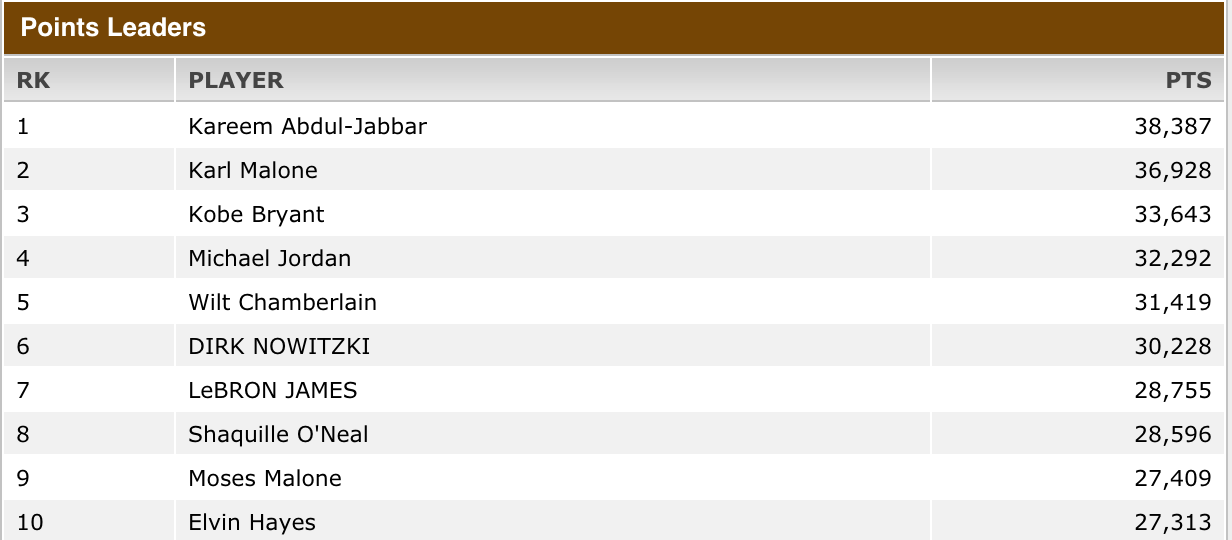
With years remaining in his career, he is moving up the career scoring record.

James also has a global brand. He has 34.7 million Twitter followers and 29.3 million instagram followers. His brand led all athletes in 2014 according to Forbes. "His endorsement and non-basketball earnings exceeded the average of the top 10 off the court earners in the NBA."

He's socially conscious. He has given tens of millions back to the community. 


He's developing a second career.


He's hilarious in Trainwreck. 

So what's the deal? Are Boston fans jealous, ignorant, hard-headed about James? The guy has achieved fame and fortune the old-fashioned way, he earned it. 

If we want to be partisan and small-minded, so be it. LeBron James isn't perfect. But does the collective negativity about James say more about him...or us? 


Saturday, April 8, 2017

Coaching Profile: John McLendon


I've seen that Coach John McLendon inspired many players and coaches. That deserves investigation. The New York Times profiled Coach McLendon here. General Ray Odierno described critical success dimensions: competence, commitment, and character. McLendon was known for his fundamental teaching skills, composure, and strategic expertise. 

He helped pave the way for successful generations of African-American coaches like John Thompson, Nolan Richardson, Jon Chaney, Tubby Smith, and others. 

Tennessee State won three consecutive NAIA titles, as they were disallowed in the NCAA at that time. 

Philosophy: Long before John Wooden, Coach McLendon believed that "basketball is a game meant to be played fast." His teams flourished with superior conditioning, transition offense, and pressure defense. His team ran three miles daily before the season and the tournament. At Kansas he studied under his adviser, basketball's founder, Dr. James Naismith. 

He believed in Naismith's advice, to always be on the attack. "The game should be played from baseline to baseline." His teams looked for "numbers" and wanted a shot every eight seconds. 

But he also recognized that success followed character. "McLendon believed that basketball was to be used as a tool to help develop discipline and character."

In 1944, his team played a team from Duke Medical School (with many former college players) in a non-sanctioned (and closed gym) contest, winning 88-44. The players then played an integrated game and spent hours socializing. This was not publicized until 1996!

Video: Big House & Coach Mac. "But John had quick eyes. He saw everything that was going on around him, which is necessary in a basketball player. The best thing John had going for him was his mind. He had one of the best-organized basketball minds I have ever seen. He was able to motivate his players to do just about anything possible with a basketball."


"One of the most remarkable people I've ever been around." - Larry Brown

Impact: Coach McLendon revolutionized the game into an uptempo sport. He was the first black professional basketball coach and the first black coach of a US Men's Olympic basketball team. In addition to paving the way for other African-American coaches, he sent numerous players into professional basketball. 


Partial List of Coaching Profiles: Ron Sen Blog

I've profiled successful coaches periodically. For some, I've just annotated interviews or podcasts. 

The list isn't designed for inclusiveness or ranking. I study coaches that I find intriguing or different. As for original ideas...they did that. 

In the pros, the players are the product. In college, the players share the spotlight with coaches. 

Here's a partial list, which also reminds me about the many worth study that I haven't profiled - Red Auerbach, Pete Newell, Pat Summitt, Phil Jackson, Tara VanDerveer, Doc Rivers, Mike Krzyzewski, Roy Williams, Lefty Driesell, Jerry Tarkanian, Chuck Daly, Etorre Messina, Muffet McGraw, Scotty Bowman, Kevin Eastman, Dawn Staley, and so many more. 

So many coaches...so little time. Maybe your favorite isn't on the list...they might be great but not so fascinating to me...not naming names. 

Regardless, we have to be ourselves...and opinions are like, well, you know. 

Archie Miller

Chris Holtmann

Frank Martin

Jack Clark

Dean Smith

John Wooden

Tom Izzo

Shaka Smart

Gregg Popovich

Bob Knight

Geno Auriemma

Bill Belichick

Don Showalter

George Raveling podcast highlights

Dale Brown

Dwayne Casey

Don Meyer

Dana Altman

Anson Dorrance

Brad Stevens

Make a STOP List to GO Further

Early on in Medicine, I learned two important answers, 1) "I don't know" and 2) "that's a good idea, we should consider that." 

Marshall Goldsmith's book What Got You Here Won't Get You There notes "as you advance in the career, behavioral changes are the only significant changes you can make." 

He writes that we must overcome two types of flaws, information-related and emotional

Information-sharing flaws:
- Too much (knowing when to stop, negativity, being judgmental) 
- Too little (withholding information, credit, responsibility, all leading to mistrust). 

Emotional flaws:
- Responding in anger
- Below the line behavior (Urban Meyer's BLAME, COMPLAIN, DENIAL)

We need a personal stop list, finding "behavioral solutions." Why? Goldsmith notes that successful people tend to have two responses - denial (I don't have a problem) or attack ("Maybe they are right but why is a smart guy like me listening to a loser like you?")

How and what can we stop to become better? In trading and investing, speculators discuss "the other side of the trade." Why am I wrong? 

  • Avoid negativity. 
  • Saying "thank you" more after suggestions (regardless of our adoption of them)
  • Working on being a 'learn-it-all' not a 'know-it-all'
  • Share credit liberally.
  • Avoiding responding when angry. I have a friend who uses the '24 hour rule'. When he's angry, he doesn't respond for 24 hours. 

Remember the acronym THINK


Possible Solutions to STOP and GO. 

1) Listen better.
2) Film the bench (what behaviors have to stop?)
3) Monitor our statements.
4) Solicit feedback.
5) Inform others that we are working on change.

Change is hard. But it demands attention to Kevin Eastman's triad of telling the truth, living the truth, and taking the truth...wanting to improve, working to improve. 

Lagniappe: 3 on 2 Continuous Drill


Friday, April 7, 2017

Introduction to Building a Run-and-Jump Defense

Excellent teams can apply AND handle pressure. The key to maximal pressure is aggressiveness, combined with intelligence and elite conditioning. The "fire" or "red" defense only works with the mindset of extreme pressure

What do you believe in? What are you trying to accomplish? Find solutions to 'wear down' an opponent, create momentary confusion, force turnovers, exhaust them, take advantage of weaker guards, turn defense into offense, and have a comeback game. 

The "run and jump" defense is really a misnomer. We should call it "trap and switch," because it creates transient doubles with switching to deny or intercept passes. 

Build the defense off one-on-one defensive attack. That has to be drilled. Young players often 'fear' getting beaten off the dribble. Too many play "dead man's defense" (six feet under the ball). Remind them with "nose on the chest", "head on the ball", "don't back down" or whatever your favorite. 

"Dog Drill." Offense vs defense with maximum pressure within lanes. Trappers would attack from outside the lane (across). 

What not to do? Attack with extreme pressure without fouling. First decision is whether you play full denial. 

1) All off ball players must be 'ahead' of offensive player. 
2) Trap horizontally not vertically. Mismatches will happen. 
3) Build the defense off hyperaggressive one-on-one defense.
4) When beaten, run to a spot ("cornerback"/hip turn).

Layups will happen but can't dominate. 

'Evolve' the defense playing "two-on-two." Have to build off sideline (trap from help side), middle attack, and back pass. Trap when dribbler loses vision or automatic middle. 

Mechanics of trapping. I tell players "put the ball handler in a GLASS BOX." They cannot GUT PASS (through the trap), as the only passes out of the initial trap are lob or over the outside shoulder. The 'temporary trap' has the trappers inside feet at least touching if not crossed. 


On the "back pass" a switch occurs (above). 


Three-on-three (from inbounds). I prefer face guarding (hawk) with guy taking away 'over the top' pass. 

Thursday, April 6, 2017

Fast Five: Truth or Consequences? And Basketball Bonuses...

"Numbers, you can't do anything about. You can just make sure that the process is done correctly and then the numbers will take care of themselves." - Chili Davis

How we mentor young people determines our success, as we work in a relationship business. We model responses to frustration and disappointment. 

1. Anger clouds thinking. Anger causes loss of self-control. Anger compromises our decisions and our choices define us. Maintain self-discipline

2. Trust defines relationships...no trust, no relationship. We build trust when we provide opportunities not guarantees. Kevin Eastman says that we need to be able to live the truth, tell the truth, and take the truth. Xs and Os only matter when players commit to executing plays, not running them. 

3. Non-verbal communication matters. Do you hang your head after a mistake? Do you 'double down' on a bad play (e.g. a turnover) with a "stupid foul?" Is your shirt on your chest or in your mouth? Does your posture connote attention and engagement? Amy Cuddy has shown that our posture has effects on our biology, as expansive postures raise testosterone and lower the stress hormone, cortisol. Make better communication a daily priority

4. Listen. We learn while listening, not speaking. Coach Bob Knight describes an exercise where he simulates a timeout during practice. He hands out cards and pens and asks players to write down what he said. 

5. Differentiate yourself. Bill Russell said, "imagination leads to innovation, that leads to differentiation." Force the coaches to play you with your concentration, alertness, reaction, and effort. Win every sprint. Compete every drill. Battle every possession. 

None of these 'talents' requires size, athleticism, or physical skill. 

Lagniappe. 


Most games with young players feature steals off the "wing-to-top" pass. Take advantage of defensive aggression with back cuts. 


Double bonus. "Manitoba" rebounding. 


Wednesday, April 5, 2017

Fast Five: Grand Theft from Radius Athletics

"Good artists borrow, great artists steal." - Picasso

Radius Athletics is a must see Twitter feed. Today, I'm stealing images from the Radius feed. They illustrate important principles. 

Fight through screens.

Cutting is an art. You can basket cut, cut to an open spot, cut to screen, cut and replace yourself, cut and fill, and cut to move defenders. I've previously shown the Toronto (Dwayne Casey) approach to defending cutters with 'tag'. Make them defend. 

Young players usually hate zone. Here Wisconsin is playing in the gaps. I thought Syracuse's Coach Boeheim teaches the front to be able to 'touch hands' to limit entry to the nail. Del Harris teaches wings to position themselves to avoid being in the passing lanes. 

Excellent example of cutting, filling, ball reversal, and then applying off-ball screens with or without give-and-go. "Movement kills defenses." 

Frank Martin's Gamecocks want to keep the ball out of the middle. He wants to make life hard with ball pressure and pressure one pass away. But he reminds players, "the help cannot get beat." 

 You have to know what you can't give up...layups and uncontested "rhythm" 3s.