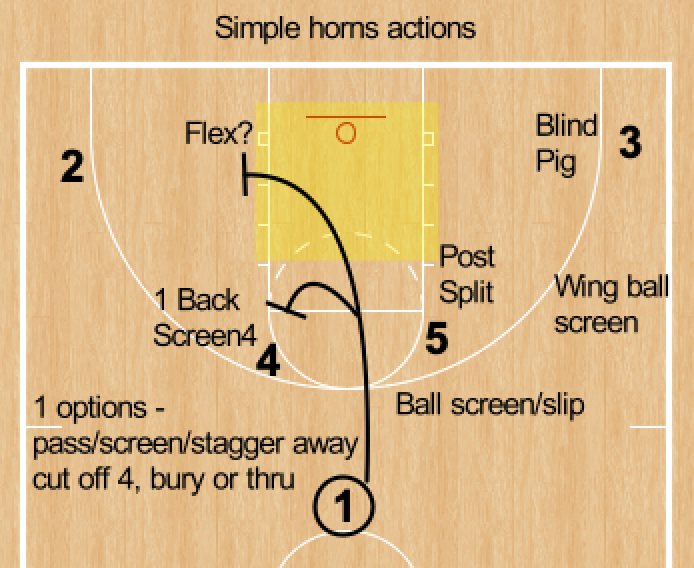
Shocking. I lack a monopoly on good ideas. Find great ideas or idea curators. Be like them.
Some regular readers achieved basketball greatness, played or coached professionally. Some coach NBA or WNBA players. But the vast majority of us 'make the big time where we are.'
Here's the "cut and paste" template. Apply it to our life, to our game, to our coaching, our teams. Find solutions that work. What works for Ryan, James Clear, or whomever don't count. You matter.
1. Think small. Translate small daily gains to become our better version. What are we reading, studying, watching, training?
2. My program is MasterClass. I watch something daily, now the late Madeleine Albright and Condi Rice on Diplomacy. Both are scholars, spoke Russian, and have a deep familiarity with the process. Coaching is diplomacy.
3. Who are we and where are we going? Match behaviors with desired results. If I wanted to be a great poker player, I'd study Phil Ivey, Annie Duke, and Daniel Negreanu. What makes Coach _____ tick?
4. Have your winning routine. Writing, MasterClass, and reading are important parts of mine. Make yours work for you.
5. Mise en place. Keep needed resources nearby. Make good habits easier and worse ones harder.
6. Soar with eagles. Associate with people who elevate you. Avoid those who drag us down. If you're here once or daily, I'm honored that you invest your time here. I pledge to make it productive.
7. Our brain is a muscle. Train it or let it atrophy. Work trains it but so does sleep...as memories become embedded during sleep.
8. Let it go. Invest more time; spend less. Not saying that every video game is a time waster but many are. Time is our most valuable commodity. We never get it back.
9. Have reminders. Cursing too much? Put an elastic on one wrist and move it to the other if we curse. If we want to reduce a negative habit, call attention to it.
10. Be a tracker. "Winners are trackers" and building great habits demands the 'pick, stick, and check' approach. James Clear, author of Atomic Habits reminds us, "don't miss twice." We make our habits and our habits make us.
11. Fall down twice, get up three times. Failure is part of the process. Do not quit.
Lagniappe. Ideally, training conducted by S&C program. Injury concerns are always a potential.
Good combo of exercises for an acceleration day
1. Forward pogos to prime movement
2. Loaded 10-yard sprint: if you have a timer, aim for 65-85% speed reduction. If not, go 95-105% BW
Be inspired by everything. Take a moment to reflect on 'the juice' that some coaches have.
"Chef's Table: Pizza, Episode 1" profiles Chris Bianco of Pizzeria Bianco from Phoenix, Arizona. Acknowledged the best pizza maker in America, he might be the Michelangelo of pizza.
He's adamant about the ingredients. Growing up in New York, he said, "the Yankees are the best or Mom's meatballs are the best, but what makes it the best anyway?" What makes great, great?
When he dropped out of high school, he knew two things, "I could be kind, and I could work as hard as any person I ever met."
When making mozzarella, he says, "you know when it comes together."
"It's not about manipulating the ingredients, it's about finding them."
Later for health reasons, he had to withdraw from cooking to leadership and mentoring his restaurants. He grew and thrived on a new challenge.
The most knowledge in the world couldn't guarantee good coaching. Passion alone wouldn't. What elevates raw ingredients into magic?
Who teaches us? In "Soup," Jon Gordon writes us, “When it comes to building a successful business, it’s not the numbers that the drive the people, but rather the people and relationships that drive the numbers." Later he shares that the secret ingredient is love.
Einstein said, "Imagination is more important than information."
Bill Russell explained, "Imagination leads to innovation leading to differentiation."
Edison said inventing takes imagination, persistence, and analogies.
That's all well and good, but quotes can't play.
What ingredients belong in the special sauce? Think about great coaches and how that applies. Nobody pretends that great coaches win with mediocre talent.
Awareness of changing assumptions. Coaches work with different generations and personalities, players from different backgrounds and even different countries. When Coach Popovich educated players about Eddie Mabo Day, he impacted Patty Mills and the Spurs.
Compassion. Great coaches know the impact of events on teams. During the Donald Sterling fiasco, Doc Rivers shared how his parents had taught him, "never be a victim."
Communication. Teams sports involve collaboration, player-player, player-coach, and among coaches. When it devolves into "us" and "them" the problems are only beginning.
Teaching. Great coaches like Pete Newell, John Wooden, Jay Wright, Coach K, Bob Knight, Geno Auriemma, Dawn Staley and many others all excel at both finding and developing players. Wooden won a title in his sixteenth year at UCLA. It won't happen overnight.
Problem solving. Part of problem solving involves all of the above. Former Secretary of State Madeleine Albright said diplomacy wasn't a chessmatch with players sitting silently across. It's more like billiards, where balls collide impacting a host of other balls (countries), each with unique interests. That applies to basketball as personnel, training, and tactical decisions impact players differently. One style of play may not suit everyone equally.
Attention to Detail. Great coaches like Nick Saban prepare for unforeseen circumstances. Lightning delay? Alabama returned to the locker with room with game plan folders on their seats. Strong teams have clarity about their intended attack. Coach Dave Smart's says his team plays "harder for longer." Watching Jay Wright's video highlights, we see the translation to the court.
Buy-in. One of Chuck Daly's best lines was "I'm a salesman." Influence demands attention, respect, and belief that the coach adds value to both individuals and the team. Players spot phonies a mile away.
Take time to see how we can get more from our teams. Everyone has ideas about what separates special coaches. Use them. Worst case... your homemade pizza will improve.
Lagniappe.
Dayton BLOB - 2-Low Cross Lob Stag
This great action + more are a part of the Most Creative BLOBs & Formations Mega-Playbook - Part 2, now on sale. Get your copy: https://t.co/7qdlro4JwZ
As a coach, your words can have a lasting impact on your players. Not everything you say will be helpful in the present moment, but in the future, your players may remember what you taught them and apply it to their lives.
"No progress comes without change, but not all change is progress." - John Wooden
Coaches and players have clay feet. Use the power of change within parameters of skill, strategy, physicality, and psychology. Become a team capable of winning by talent or by tactics.
What one change could be a difference maker? Every team, coach, and player will have different answers.
As coaches, can we:
Become more positive
Bring more energy
Communicate better
Teach better
Handle frustration well
Delegate better
Be more media friendly
Work better with administration
Skill. Shoot better.
Take better shots...the quickest path to improvement.
Avoid 'free shooting'...add defense and time or other constraints.
Constantly seek to achieve your PB (personal best).
Strategy. Simplify actions.
Run similar actions from differing formations.
Run different actions from the same formation.
Force defenders to make hard choices.
Overview.
Post entry options (3 series)
Duke elbow handoff series (2)
Post entry cutter option series.
Physicality.
"Winners are trackers."
Workout with a partner. Drag a teammate into the top 10%
Stay in top condition with 220 yard sprints and 80 seconds of rest. Repeat eight time finishing each sprint in under a set time (36-40 seconds). Must have medical clearance.
Psychology.
Better physical condition facilitates mental toughness. "Fatigue makes cowards of us all."
Mindfulness improves focus and sleep, reduces stress hormones and it's absolutely free
Find just one thing to improve.
Lagniappe.
Defense involves communication. If you are not talking, you are not playing Defense.
The philosopher Epictetus said of a friend's criticism, "If that person really knew me and my flaws they’d have said something much, much worse.”
Writing a daily column is challenging because it exposes noise, ignorance, and flawed thinking. Here are just a sampling.
Head snap. When defending the back cut, players have the options of the "head snap" or "opening up" to the ball. I taught the latter because I learned the latter. Mea culpa.
Rebounders are born not made. I've coached some great rebounders, players who averaged double figure rebounds, Samantha Dewey, Cecilia Kay, and my twins Karen and Paula. Find players with a nose for the ball.
Zone defense in youth basketball. We never played any until the latter stages of my last season coaching, when we played a hybrid defense because we couldn't contain the ball. The triangle and two gave us strength inside and allowed pressure on shooters.
Princeton offense hard sell. It feels as though almost daily there are promotions to buy this or that rendition of the Princeton offense. "The offense is designed for a unit of five players who can each pass, shoot, and dribble at an above-average level." I never had anything approaching that.
I get it. It teaches a lot of offensive basics and generates layups and three point shots. But how much time does it take to install and is that time in development robbing players of fundamental instruction?
Overemphasis on advantage disadvantage. Each practice, we ran a segment of 5 versus 7 full court, no dribbling. When you defeat disadvantage with constraints, you will handle five-on-five because you learned to cut and pass.
Soft skills are hard to learn. Some will tune out "soft skills," skill that separate champions. Those include leadership, toughness, professionalism, resilience, and effort - the will to play harder for longer than opponents. Ignore them at our peril.
Strength and conditioning. As a Pulmonary/Critical Care specialist, I trained in exercise physiology and applications in the diagnosis and treatment of exercise limitation. That doesn't make me a strength and conditioning trainer. If players want to be their best, they find trainers that work with them, but the investment costs time and money.
Give parents the benefit of the doubt. Overall, I had a positive experience but seldom do parents challenge your knowledge or equity (fairness) directly. Remember, Oscar Wilde's quote, "a good friend will always stab you in the front."
Margin of victory. We never grew up worry about 'margin of victory.' I never followed the Vegas Line on Middle School hoop. But some did, like the guy from ______ who kept his starters in, pressed full court, up fifteen when I subbed in deep reserves with three minutes left. I hope he 'covered'.
Gorilla basketball. Physical basketball is fine, but leave the brass knuckles at home. I only ask officials to keep the kids safe. Sometimes the best way to respond is overwhelming force. After a high school team had knocked out two our kids including future WNBAer, Sheylani Peddy, the team asked for payback in the return matchup. Melrose led 42-12 after ten minutes before the Melrose coach told the team to back off.
I'm sure I'm wrong about many other issues, but those arose quickly.
Players don't always understand the message. Be positive but set expectations high. Ask players questions.
1. How are you impacting the game? Ask them to generate three items that explain why they should play. Seniority won't fly. Share specific examples about how they make teammates better.
2. How are you being the best teammate you can? That doesn't mean, "I'm the leading scorer." Again, ask for specifics. Are they 'professional', positive, energy givers?
3. What does being coachable mean? It means different things to different players. Discuss focus, energy, listening, being fully prepared.
4. What do you want from this experience? If it's spending more time with your friends, regardless of playing time, that's an answer. Is it about minutes, role, and recognition, being part of a team, contributing to winning and something more than yourself, that's an answer.
5. How can you as a player become a better leader? Do you "bigfoot" underclassmen? Explain how you model excellence. Are you on time, cheering on teammates, doing the grunt work daily? Do you 'cheat the drill' or are you going 'full tilt, full time'? Do you think a freshman or sophomore can help lead?
1. How are you impacting the game?
2. How are you being the best teammate you can?
3.What does being coachable mean?
4. What do you want from this experience?
5. How can you as a player become a better leader?
Lagniappe. SLOB "Slip" face cut
Las Vegas Special Situations down 1 with 0.8 seconds left
Get animated in seconds with the most innovative animation and video creation app on the market for basketball.
Lagniappe 3. Saban on focusing on your job as a player. "I respect what it takes to win."
Nick Saban was asked Wednesday evening how hard it is to gauge offensive growth when the quality of opponent can vary from week to week. He responded as only he can. pic.twitter.com/1WAkpeulJA
Coaching is a relationship business. To win, coaches rely on skill first. Players make mistakes. So do coaches. Managing hard conversations and feelings is an art.
.@tomecurran on Kendrick Bourne's TWO snaps vs Miami on Sunday:
- Bourne is in Matt Patricia's doghouse after missing a meeting in preseason. - Bourne's lack of use caught the eye of Robert Kraft.
Feeling disrespected? Remember Coach Popovich's comments to "get over yourself."
Here's a screenshot of notes from Esther Perel in relationships
- Who has the power? Who gets to decide? Who is important?
- Who has my back? Can I rely on you? Do you think of me?
- Do you value my presence and opinion?
Recall the "Big 3" that fuel conflict - minutes, roles, and recognition. The coach has the power but the player (and family) feel the impact, a "velvet glove" or an "iron fist."
What coaches see isn't the same as what players and family see. If two players are "similar", a coach may value potential over seniority, size and athleticism over age, and so forth. Players see "loss of status." Families see issues of equity (fairness), status, and ego.
Think about "inverting" from power, trust, and value, meaning helplessness, isolation, and worthlessness. Reframe it as being thrown down the pyramid of Maslow's 'Hierarchy of Needs'.
When conflict arises, choose to fight or listen? Avoid inducing "shame" or helplessness.
Perel advises we consider, "what is the one thing you wish you never said?"
Remember situations where "high level" conflict arose. As a 'style' I avoid conflict. The one time I refused to budge was about practice time. I was a volunteer and parents paid over $400 a season for gym time, officiating, and league fees. I was told we could have two hours a week. I replied that some teams have more than four times that much. "I can't coach without at least three hours a week." They found a way.
Conflict is part of our humanity. Return to the dynamic of power, trust, and value. Find ways to collaborate to find common ground, listen, and understand the opposing position. Sometimes we only agree to disagree.
Lagniappe (something extra). Great stuff from Basketball Immersion.
A compilation of our favorite 2022 NBA summer league ATO plays that work. 0:03 - 5 Out Actions 5:37 - Single Tag Plays 7:10 - Post Reaction Plays 8:24 - Other Cool Plays 10:30 - Sideline Out of Bounds Playshttps://t.co/hPWPEVeJ3hpic.twitter.com/BrifDbwAUb
Unless you can recruit, teach and develop better than the next person. Just as as some say politics is downstream from culture, winning is downstream from teaching.
Ta-Nehisi Coates reminds us that we cannot separate loose and useless words from loose and useless thoughts. Don’t ask players to execute that which doesn’t exist.
"Make layups and free throws." Duh. Specifics empower players to execute.
Layups (3):
Tufts reverse layup lines.
Kentucky layups. For youth basketball, demand 40-50 layups in two minutes.
Pass and cut layups where everyone shoots.
Free throw tips (3):
Wait for the ball before stepping to the line. Don't freeze.
Breathe out before shooting the free throw.
Align with the nail. As a kid, I remember Bill Bradley recommending to aim at the center of the four bolts holding the goal to the board.
Have a shared vocabulary (whatever works for you).
PnR defense - e.g. hedge/show/fake trap are all the same
Invest time in 'reads' (use the Internet's great resources).
Off ball screens
PnR reads
Take advantage of great resources that players can use to become difference makers.
Lagniappe. The 'third' wheel of development after skill and strategy is physicality. Wonderful presentation including foot and ankle, isometrics, sprinting, competition, and weights. Coaches value athletic explosion.
Subjective judgments lack reproducibility relative to algorithms or mechanical judgment. For example, if we asked who are the best players in professional baseball, we'd get a variety of answers. If we asked for the WAR (wins above replacement) of MLB players, we might not answer the question but have more information.
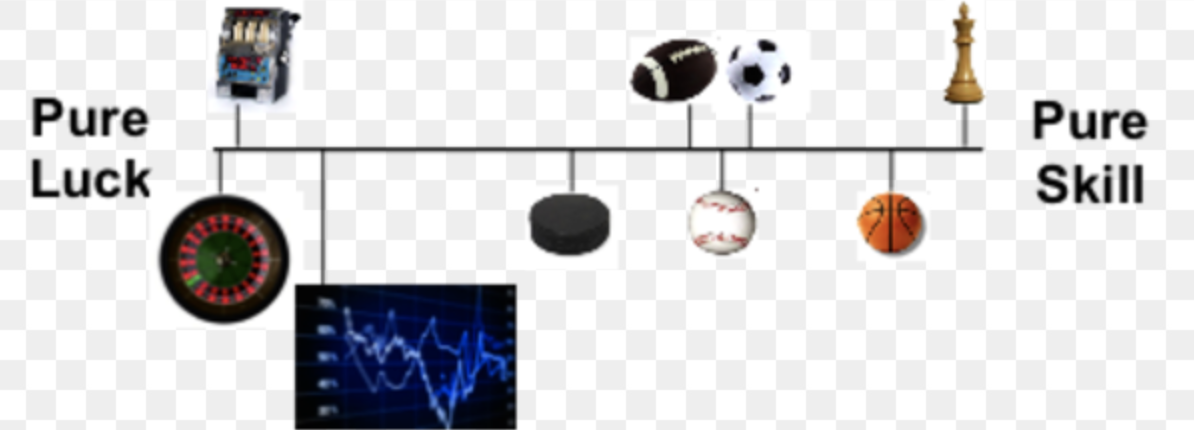
Winning blends skill, luck, and an occasional favorable call.
Michael Mauboussin addresses this in The Success Equation and Annie Dukes expands on it in Thinking in Bets. I'd rank volleyball in a similar zone to basketball, highly skill-dependent.
In Moneyball, Michael Lewis profiled baseball's paradigm shift to more analytics-based roster construction. Coach Celli's mathematics background appears in subtle and less subtle ways. Statistics matter to the extent that they impact the score.
Does a harder serve win more points or create more service errors?
Do back row attacks increase or decrease scoring chances?
Which are most effective - setting outside, quick sets, back sets?
How effective is a given player's 'setter dumps'?
Do jump serves add or decrease efficiency?
Statistics add context and 'signal'. The best players, teams, and coaches do more of what works and less of what doesn't. Execution beats innovation.
"One can get through life without being methodical and organized, but you won't be as successful." - Richard Branson
After his space flight, Branson had a list of 35 improvements ranging from better head rests, user-friendly seat belts, improved personal hydration system, and sunglasses.
Management by walking around (MBWA) allows leaders to experience the products and services. Seeing and experiencing problems helps us create better practices.
What items belong on our TO DO list?
1. Improve our drill book, practice schedules, and playbook. "The film is made in the editing room."
2. Study video and share with players. This is what you did. What did you see and what choices did you have?
3. Prioritize dialogue and feedback with players. How can we make practice and the experience of being on the team more valuable to you? I haven't done anywhere near enough of the latter.
4. Coaches miss a lot of time from families. Thank families for the sacrifices they make and make the time we have more quality time.
5. Thank a mentor or an assistant for their contribution to our coaching experience.
Lagniappe. Coaches have favorites.
The biggest complaint I get from players about coaches is that they have favorites…
Here is 10 different ways to help you become a coaches favorite! π
Players hear the term "breaking down the defense." What does that mean to them?
Basketball is a game of mistakes. Basketball is a game of separation. Basketball is a game of cutting and passing.
Overview for players - spacing, player and ball movement, scoring moment. Translate ideas.
"Draw 2"
Pick-and-roll
Penetrate the defense.
Reverse the ball.
Use mismatches.
Get numbers.
Play Inside-outside.
"Draw 2." Most competent defenses design stopping key cogs of an opponents offense. They help and force the 'star' to choose another option.
At high levels, the second option is still talented. At lower levels...
For the 'star', "win in space" and caution when "playing in traffic."
Design actions to limit the chance for defenses to bring help.
Duke elbow handoff series clears potential help.
Pick-and-roll. In its many variations, the PnR forces defensive communication (variable at best at lower levels) and offers a variety of options for the offense.
Two minutes of gold from Auerbach and Bird. Players should watch this again and again.
Penetrate the defense. Penetrate with the dribble or the pass to set up many options.
Reverse the ball. Ask players how they intend to reverse the ball.
Expect them to explain they can use perimeter passing, skip passes, or do so through the post. "Movement kills defenses."
Boeheim vs Boeheim, ball movement versus 2-3 zone
Use mismatches. Basketball is a game of:
Passing and cutting
Mistakes
Matchups
Possession and possessions
Applying and defeating pressure
Exploit favorable matchups or in the 'positionless basketball' era, use switching to our advantage.
Get numbers. Numerical advantage occurs in many ways. Transition is the most obvious. Many of the above examples create small edges.
Michigan State's Tom Izzo creates an inside mismatch against the 2-3 zone.
Play inside-outside. Feed the post and get rewarded by relocation. Nikola Jokic and LeBron James are two of the masters.
As players, remember, VDE - vision, decision, execution. Julius Caesar wrote, "veni, vidi, vici." I came, I saw, I conquered.
Lagniappe. Continuing with the theme...Hammon Time.
Las Vegas Aces head coach Becky Hammon led the WNBA in offensive rating at 109.6 and these plays are some of the reasons why.
Young coaches may seek guidelines to share with players. These may help.
Players, embrace these principles.
1. Great players make the people around them better. That applies across team domains, such as Larry Bird and the Celtics, Freddy Mercury and Queen. Are my choices making others better? The core of Metallica has lasted forty years. How? They agreed to choose whatever is best for the group.
2. Sweat the small stuff. Great teams and players handle the details. Coach Lane always shared "three keys to victory." Simplify and clarify expectations.
3. Always do your best. It won't be perfect. It isn't the same daily. It may not be great. "If you just do your best, there is no way you can judge yourself. And if you don’t judge yourself there is no way you are going to suffer from guilt, blame, and self-punishment." - don Miguel Ruiz in The Four Agreements
Being your best means being prepared, practicing fully focused, knowing and doing what you can do in the moment.
4. Excellent players limit mistakes. Great players and teams do not give away games. They take away games with aggression, intelligence, and execution.
5. Be a great teammate. Anyone can be a great teammate. We control our attitude, our choice, our effort. Bring positivity and energy.
Select key responsibilities for coaches.
1. Help players "see the game." Micro and macro game details require learning and teaching structure. Spacing, player and ball movement, and finishing/defending don't come naturally. Teach basketball symmetry - apply and handle pressure, force and avoid mistakes, get/prevent quality shots.
2. Develop players and teams. "Every day is player development day." Improve and revise our drill book, playbook, and curriculum teaching spreadsheets. Google Drive is an outstanding storage resource.
3. Get the most from players, putting players in position to succeed in the game and in life. Help players become their best versions. "Utilize strengths; attack weaknesses."
4. Understand that the person is more important than the player. Players are more than assets or commodities to be deployed and consumed.
5. Put players first. "Are we building a program or a statue?" As a group, many of us lament the empathy-deficient attitude of coaches making multimillion dollar salaries who oppose sharing any monies with players. That's just one form of unequal treatment of the people playing the game.
Lagniappe. Win with overwhelming force.
Lagniappe 2. Be intentional.
When you watch basketball with intention.. you learn a lot
Watch off the ball (screening, moving without the ball, getting open, etc)
To paraphrase Steve Martin, there are two ways to get your stuff out there, 1) write great stuff and 2) already be famous. "I'm screwed."
Boundaries contain our thoughts, feelings, and behavior during relationships. Whether we think about it or not, we have boundaries. They may be subtle, but others know 'appropriate' behavior. Know where you're approaching lines.
Hard conversations about roles, minutes, and behaviors tests those boundaries. Always involve another adult in those conversations. Separate bad choices from bad character. A player's bad court decision doesn't entitle the coach to throw her under the bus, calling the player 'worthless' or 'useless'. Be the adult.
Suffering is the price of love. That includes grief and disappointment about how a player is playing or when not playing. Providing a chance for one player may get seen as stealing it from another.
If we set expectations and boundaries for players (commitment, character, studies, chemical health), then stick to them as leaders.
Educational boundaries exist. In secular institutions, coaches teach basketball and life, but not religion and politics. Those boundaries keep us out of parental domains. But we own teaching equality and sportsmanship.
Where do the boundaries exist? At extremes, they include indifference or violation.
Relationships have boundaries at home, at work, and at play.
What are our boundaries at work? Once, they were more rigid; often they are more casual.
Do we comment on a coworker's appearance? "That's a great suit, Jack."
Do we share our personal lives at work? If so, how much?
Develop emotional intelligence to recognize others' boundaries.
Boundaries evolve. Rigid and flexible boundaries are part of life.
What additional boundaries come into play in coaching?
Weight. Learn about eating disorders. Emphasize health, good nutrition, and conditioning over weight. Do not have weigh-ins. "Stay calm and BE INTENTIONAL about what you say to them. I am here. I am concerned. You are not alone. You can trust me. These statements are what I heard consistently. And yes, be concerned, but do not turn them into “the team freak” that is struggling."
Attitudes. Positive and negative boundaries exist...truth without assault.
Strategy discussions aren't in parents' domain.
Commenting about other players with a parent is unwise. "Susie has improved a lot," seems innocent enough. But Joan's parent may see it as dismissive of her, thinking "Coach is disrespecting Joan."
"Reflect on our boundaries...where one entity starts and another stops."
Screenshot from Esther Perel, MasterClass, Relationship Intelligence
Lagniappe. DHO, Stagger into mid-range.
Chicago Sky - Double Backscreen leads to layup
Get animated in seconds with the most innovative animation and video creation app on the market for basketball.
Lagniappe 3. Be open to new possibilities. Unscoutable.
Something we toyed with This summer was the idea of "partner inbounds". Basically just setting players up, partnering them up, and letting them do whatever they want - screen, cut, etc.
So here 5 & 1 are partners and 3 & 2 are partners. They can do anything with that partner. pic.twitter.com/R9W2GTIkQ7