Total Pageviews
Thursday, July 27, 2017
Fast Five Plus: Rules - Why Do We Need Them?
We all have rules. What do they accomplish? Are they enforceable? Do they apply to everyone?
We create rules to sustain order. No talking during practice? But talk (early, loud, and often) during practice! But we can develop rules as a pathway to better habits.
Create rules to alter behavior. I'd call those CONSTRAINTS.
- Pressure the ball or sub out.
- Dribble without purpose, sub out. (Immediately putting the ball on the floor)
- Dynamic starts (e.g. off the catch) to most drills (can't use for inbounding per se)
- Dean Smith's scrimmage scoring based on shot quality (turnover is a negative score)
Sometimes we don't have enough rules.
- Respect the game (teams) playing on the court ahead of us.
- Leave the gym in better condition than you found it (no trash, water bottles, wet spots)
- Respect opponents and officials.
- Respect your parents.
- Use your notebook to improve game and life knowledge.
- Embrace the handouts (core values, Pyramid of Success, "Toughness" concepts
Do something positive for your parents every day.
"But I don't know what to do." See. There are an endless supply of possible chores - dishes, laundry, dusting, vacuuming, making your bed, cleaning the garage. Can you spend twenty minutes a day giving back to your family?
"Maintain the team."
- Support teammates on and off the court.
- Make sure teammates get to practice, games, study sessions on time
- Learn about your teammates.
Read. This is non-negotiable.
Read something, thirty minutes a day. Think about what you read and how you will apply it to your life.
Need suggestions?
SethGodin.com (blog)
The Positive Dog (Jon Gordon)
The Compound Effect (Darren Hardy)
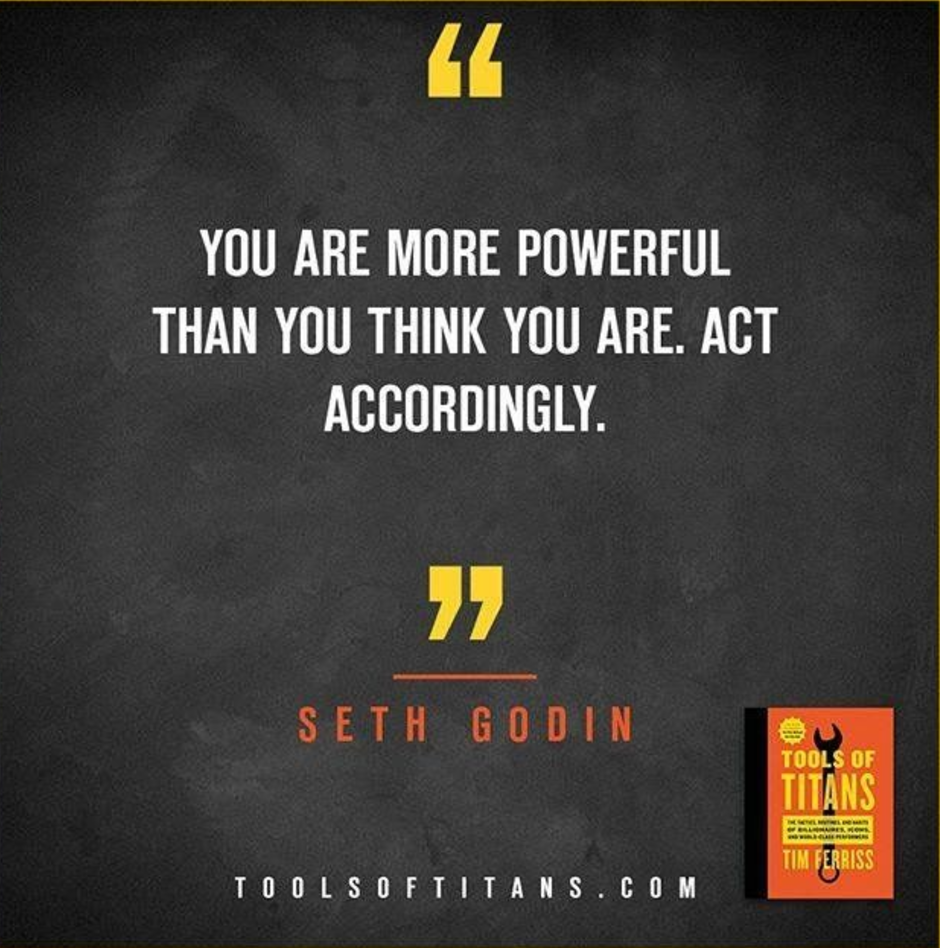
Tools of Titans (Tim Ferriss)
The Hard Hat (Jon Gordon)
A People's History of the United States (Howard Zinn)
Reduce the nonsense.
"Ignoring is not the same as ignorance." - Margaret Atwood
Instead of sending 100 text messages to your friends, make a 100 free throws.
Anson Dorrance's quote about Mia Hamm applies. Be that 'guy'. Ordinary or extraordinary? Do have rational thought or ration thinking? Get better at getting better.
Wednesday, July 26, 2017
Ten Core Concepts and Sources
Life constantly teaches us, if we are open to learning. We need to expand our tools and how we share them with our players. How they practice, talk, meet, interact, and learn informs their growth as people first and players second.
1. Source: The Handmaid's Tale (Margaret Atwood)
We can only become our better version as we recognize our flaws and consciously work to overcome them.
2. Source: Monday Morning Leadership (David Cottrell)
3. Source: Monday Morning Leadership (David Cottrell)
Success begins with our culture and relationships. Do you work for someone or with them? Cottrell has also expressed it as "People don't quit jobs. They quit people."
4. Source: The Legacy Builder (Rod Olson)
Our job is to teach and inspire; "be demanding without demeaning." Become a '3-Dimensional coach. The Level 3 Coach "captures the heart of the athlete, develops relationships. Intrinsic motivation. These connections allow the fundamentals to be taught and learned more effectively and allow the psychology to gain real traction. Player EFFORT and ATTITUDE improves and affects all facets of the team and sport."
5. Source: You Win the Locker Room First (Jon Gordon and Mike Smith)
Commitment isn't enough only one dimension in the broader domain.
6. Source: The Positive Dog (Jon Gordon)
Embrace positivity. Find solutions, not just problems.
7. Source: Quotes, John Wooden
But don't confuse activity with indifference. The ostrich has a purpose.
8. Source: The Empire Strikes Back, George Lucas
Part of "speaking greatness" is building confidence through proven success. The legacy of 'The Hero's Journey" plays out every day in sports.
Whether it's Odysseus in The Odyssey, Batman, or Norman Dale in Hoosiers, extraordinary journeys are out there for our players. Encourage them to write a great narrative for themselves.
9. Source: Made to Stick
Become a storyteller. Captivate your audience by learning the intricacies of narrative. Listeners absorb more concepts and information from a great story. Timely intervention is abstract. "Havlicek stole the ball" or "The Block" define it.
Executive Book Summary of MADE TO STICK from Anjali Mehta
10. Source: Tools of Titans, Tim Ferriss
If we want to be exceptional, then we have to act exceptional every day. We need better tools, better habits, better attitude. The tools are out there...
Stretching is both figurative and literal...
10. Source: Tools of Titans, Tim Ferriss
If we want to be exceptional, then we have to act exceptional every day. We need better tools, better habits, better attitude. The tools are out there...
Stretching is both figurative and literal...
Tuesday, July 25, 2017
K Clips: Coach K from "Leading with the Heart"
Coach Mike Krzyzewski stands among the leading college coaches in history. He built Duke into a perennial powerhouse and studied under Bob Knight at Army.
He shares many thoughts in Leading with the Heart, a bestseller on the New York Times, Wall Street Journal, and Business Week.
Here are select quotes from Leading:
"The principle that "we're all important" is also something that needs to be demonstrated immediately."
"I expect every player we recruit to graduate." (The book was published in 2000)
"The first rule is NOT DOING ANYTHING DETRIMENTAL TO YOURSELF" because that reflects on the team and the university.
"Your culture doesn't allow jealousy. That's what the best families are all about."
Coach K distributes laminated cards with everyone's phone numbers (including his and assistants) because he wants a support system so nobody is stranded.
"Stress honor in all things."
"You're only as good as your talent."
Coach K tells a story about getting mud on his shoes as a plebe at West Point. Initially, he was mad at his friend who had splashed mud and led to a royal reaming. But he realized that it was HIS choice not to go back and clean them up, leading him to remark,
"Embrace the hell out of personal responsibility." (I'm thinking that times may have changed as evidenced by Grayson Allen).
"Failure is part of success."
"Discipline is doing what you are supposed to do in the best possible manner at the time you are supposed to do it."
"Bonds have to form among all members of the team. An architecture of leadership has to be created so that the wheel is sustained if something happens to the hub."
Monday, July 24, 2017
Fast Five: Staying in Your Lane
My son, Conor, is a portfolio manager and columnist for Bloomberg. He is exceptional at what he does, although sometimes frustrating to talk to. Because he always shares a lesson about 'staying in your lane' in what he invests or writes.
Maintain discipline.
This reminds me of Warren Buffett being asked if he wanted to risk ten dollars to win ten thousand in a celebrity golf tournament if he got a hole in one. He declined. "If I am not disciplined in the small things, how can I expect to be disciplined in the big ones?"
Basic training.
That certainly applies to coaching and especially to developmental coaching. We can't "go back to basics." We have to live there.
Many of the players today were not familiar with the "Shivek" drill (Arik Shivek, Israeli National Team). It demands passing and cutting, setting up your cut, passing on time and on target, and closing out and finishing. It teaches and exposes. One player asked if I went to Israel for that...I explained I went to FIBA YouTube.
We can never leave form shooting. Excellent shooters are obsessed with their form, footwork, balance, setup, quickness with consistency, follow-through. But they hone technique "warming up their shot." What decent player goes out and starts jacking up threes? Nobody.
Preach attention to detail.
Reviewing "blind pig" is a good example. The post player receives the ball with the outside foot closer to the baseline (corrected by Gabe THANKS!). This improves the passing angle (footwork). If the wing doesn't get the ball, then the 1 can consider a handoff, cut off the post, or the 5 can go isolation. Everyone needs to understand where to be and where not to be.
Write it down.
Encourage players to write down what they learn in a notebook or diary. Handwriting improves learning.
Own it.
We reviewed the learning process - explanation, demonstration, imitation, and repetition, repetition, repetition, repetition, repetition. Whether it's Mikan, Reverse Mikan, power (two-footed) layups, or Beat the Pro, everything is designed to be refined at Camp Driveway. Take it home and make it yours.
"There is an old expression: You know a workman by the chips they leave. It’s true. To judge your progress properly, just take a look at the floor." - Ryan Holiday in Ego is the Enemy
Sunday, July 23, 2017
Fast Five: Hummingbirds
UNC women's soccer coach Anson Dorrance recognizes differences between players. He could describe the difference between players as warriors and hummingbirds.
Having studied (one course) ornithology in college, I respect hummingbirds. They are a thermodynamic biomarvel (above). Explaining how they migrate from an energy perspective is remarkable.
Dorrance uses the "English" term "stuck in" to describe players willing to play through contact and embrace physical play. These are the Marcus Smarts with exceptional toughness and agitators. Shane Battier and Ron Artest also come to mind.
The converse are "hummingbirds", remarkable enough for their skill and energy, but finesse players who find ways to avoid the fray.
Hummingbirds have a self-protection mindset (and sometimes a frame) that bespeaks fragility. And it's not always size-dependent. We see finesse big people and warrior little people.
Hummingbirds seldom take charges. They bail on layups to minimize contact. Sometimes they have "alligator arms" while pursuing rebounds. You don't necessarily bet on them going for 50-50 balls.
In his "Toughness" essay, Jay Bilas includes "get on the floor" and "take a charge" among his thirty-one toughness traits.
Tom Izzo at Michigan State takes a proactive approach, conducting some rebounding drills with helmets and shoulder pads. You don't see hummingbirds in Lansing.
Dorrance clearly uses "hummingbirds" as a disparaging term. If you're going to be a hummingbird, then you had better compensate in other ways.
Tony Watson demonstrates a drill for finishing with contact. The "ten toes to the rim" mantra doesn't apply when finishing this way.
As coaches, we have to be smart. We want tougher players, but we don't want injuries via "hamburger drills".
Having studied (one course) ornithology in college, I respect hummingbirds. They are a thermodynamic biomarvel (above). Explaining how they migrate from an energy perspective is remarkable.
Dorrance uses the "English" term "stuck in" to describe players willing to play through contact and embrace physical play. These are the Marcus Smarts with exceptional toughness and agitators. Shane Battier and Ron Artest also come to mind.
The converse are "hummingbirds", remarkable enough for their skill and energy, but finesse players who find ways to avoid the fray.
Hummingbirds have a self-protection mindset (and sometimes a frame) that bespeaks fragility. And it's not always size-dependent. We see finesse big people and warrior little people.
Hummingbirds seldom take charges. They bail on layups to minimize contact. Sometimes they have "alligator arms" while pursuing rebounds. You don't necessarily bet on them going for 50-50 balls.
In his "Toughness" essay, Jay Bilas includes "get on the floor" and "take a charge" among his thirty-one toughness traits.
Tom Izzo at Michigan State takes a proactive approach, conducting some rebounding drills with helmets and shoulder pads. You don't see hummingbirds in Lansing.
Dorrance clearly uses "hummingbirds" as a disparaging term. If you're going to be a hummingbird, then you had better compensate in other ways.
Tony Watson demonstrates a drill for finishing with contact. The "ten toes to the rim" mantra doesn't apply when finishing this way.
As coaches, we have to be smart. We want tougher players, but we don't want injuries via "hamburger drills".
Psych Job: Excerpts from Anson Dorrance
Anson Dorrance is an elite soccer coach at the University of North Carolina. His teams have won 22 NCAA championships and he coached the USA Women to a World Championship. His tenure has not been devoid of controversy.
When I think of Coach Dorrance, key phrases emerge, "competitive fury", "competitive cauldron", and "core values". And, of course, his teams win...a lot.
In this interview he discusses core values, competition, playing time, psychology, motivation, and the very real differences between coaching men and women. His teams have won 22 NCAA championships and he has coached the USA Women to a world championship. It's lengthy but worth it.
I share excerpts without commentary:
- We don’t whine.
- We work hard.
- The truly extraordinary do something every day.
- We choose to be positive.
- When we don’t play as much as we would like we are noble and still support the team and its mission.
- We don’t freak out over ridiculous issues or live in fragile states of emotional catharsis or create crises where none should exist.
- We are well led.
- We care about each other as teammates and as human beings.
- We play for each other.
- We want our lives (and not just in soccer) to be never ending ascensions but for that to happen properly our fundamental attitude about life and our appreciation for it is critical.
- And we want these four years of college to be rich, valuable and deep.
"I’m very big on playing for each other. And so the psychology is, the players support one another and obviously it’s a huge challenge for a reserve to support a starter."
"They’d much rather have the reason for them not playing is that the coach doesn’t like them. They would hate to have that the reason for them not being able to play is that they’re lazy or they don’t play with intensity or they have no self-discipline or they don’t compete or they don’t have any self-belief."
"The most critical thing is to have a competitive fire. The great ones I've seen have the most extraordinary competitive fire, it's an issue in their lives, and it can be a problem. I mean, this is a very hard thing, and I'm talking about the ones with that hell-bent "I'm going to carve you up" mentality. It's actually very hard to corral and leave on the field. It almost becomes a chip on their shoulders, and the way they conduct their lives. Or it becomes such a stress, it's not an easy horse to ride."
"So a huge challenge in women's athletics is to get them to compete against their teammates and friends in practice with the same intensity they compete with their bitter rivals."
"I think with women you've got to be overwhelmingly positive. You can't afford to criticize any of them until they trust you. And then a part of the criticism has to be constructed in a way where they have to feel like you care about them at the end of it some way, otherwise they're not going to be listening to it."
"With women the overwhelming majority of tape has to be positive, otherwise it's going to shatter their confidence. They're not going to look at it and try to correct it, they're going to look at it and say "oh my gosh, I suck."
His note to Mia Hamm appeared in her book, "A vision of a champion is someone who bends over, drenched in sweat, at the point of exhaustion, when no one else is watching." He had seen her running sprints, alone, in a park on a day off.
Saturday, July 22, 2017
The Merits of Open Practice
"See with your eyes, not with your heart."
The debate continues...should practices be open or closed? I share my thoughts...which are opinion, not having arrived on stone tablets.
First, I coach middle school (girls) and it's about development of the person and the player. You want our handbook, playbook, drills, philosophy, or want to come and film practice (that's a joke), be my guest.
Second, opportunity matters. I've had parents who track (there's an app) every second of playing time in games. That's helpful, because it lets me know if ANY player isn't seeing the floor (aside from foul trouble and injury).
My ego can't be about 12-14 year old girls winning basketball games. When kids get into the college of their choice, succeed academically, or drop me a note thanking me for helping, that's not the WHY, it's the result of the process. And I don't control what happens the second they've finished middle school. The high school coaches couldn't care less about my opinion and they do what they do. It's their show and they own the results. "Control what you can control."
Third, the teaching isn't just about basketball. I discuss preparation (e.g. Sun Tzu, The Art of War), the history of unequal matchups (Malcolm Gladwell, David and Goliath), empowering women (Arlene Blum Climbs Annapurna from Michael Useem's The Leadership Moment), self-instruction (Joshua Lawrence Chamberlain and Gettysburg), and underdog victories (Robert E. Lee at Chancellorsville). They hear about Anson Dorrance's "competitive fury". We can talk about Nick U'Ren and the Warriors' championship in 2015 or why developing listening skills matters. Every coaches teaches alcohol and drug prevention and forging self-respect and healthy relationships. A parent who is a boys high school coach called it what it is, "a holistic approach'.
Disadvantages. There is potential for distraction of players looking to parents for approval. I haven't seen parents coaching their children during practice. Parents can question coaching methods...leadership always comes under scrutiny. That simply comes with the territory. In my opinion, it is better to be questioned for what we do than what another conjectures that we do.
Advantages. Transparency reveals practice planning, division of practice time, attention to key elements (e.g. shooting, applying and handling pressure), attention to detail, individual and group instruction, conditioning within basketball activities, and role of assistant coaches. My assistant coach was named this year's High School's female athlete of the year.
Open practice informs commitment, discipline, and effort of everyone involved. Coaches aren't allowed to have low energy days or low engagement practices. Open practice shares the philosophy, culture, and identity development of within the program.
Open practice means sharing; I learn from kids and their families, too. The more parents know about basketball and coaching techniques, the more they can share the experience with their families. We all have coached multiple children in families. Sharing produces trust which engenders loyalty.
Networking results among parents and families. They participate in other activities (sports or otherwise) together. Some socialize. Maybe some develop business relationships; the opportunities are there.
Openness produces accountability. We create an expectation of a higher tempo practice for greater efficiency. The accountability is mutual between coaches and players. There's no excuse for foul language. Parents have eyes even when they view their children through the prism of parental love. It's rare for players to excel in practice and struggle consistently in games. More eyes over more time produce more reasonable expectations.
Openness can reinforce "message discipline". Parents who repeatedly hear, "the ball is gold", "share the ball", "sprint back", "don't back down", "talk", "no paint", "it's not your shot, it's our shot" have the chance but not the obligation to give constructive feedback to their children.
I've been truly blessed in over fifty years in the game and have positive experiences with parents. As Brad Stevens notes, "we get back more than we give." And I realize that I'm a developmental coach, but the game is an "open source in an open domain". The secret sauce is sharing.
The debate continues...should practices be open or closed? I share my thoughts...which are opinion, not having arrived on stone tablets.
First, I coach middle school (girls) and it's about development of the person and the player. You want our handbook, playbook, drills, philosophy, or want to come and film practice (that's a joke), be my guest.
Second, opportunity matters. I've had parents who track (there's an app) every second of playing time in games. That's helpful, because it lets me know if ANY player isn't seeing the floor (aside from foul trouble and injury).
My ego can't be about 12-14 year old girls winning basketball games. When kids get into the college of their choice, succeed academically, or drop me a note thanking me for helping, that's not the WHY, it's the result of the process. And I don't control what happens the second they've finished middle school. The high school coaches couldn't care less about my opinion and they do what they do. It's their show and they own the results. "Control what you can control."
Third, the teaching isn't just about basketball. I discuss preparation (e.g. Sun Tzu, The Art of War), the history of unequal matchups (Malcolm Gladwell, David and Goliath), empowering women (Arlene Blum Climbs Annapurna from Michael Useem's The Leadership Moment), self-instruction (Joshua Lawrence Chamberlain and Gettysburg), and underdog victories (Robert E. Lee at Chancellorsville). They hear about Anson Dorrance's "competitive fury". We can talk about Nick U'Ren and the Warriors' championship in 2015 or why developing listening skills matters. Every coaches teaches alcohol and drug prevention and forging self-respect and healthy relationships. A parent who is a boys high school coach called it what it is, "a holistic approach'.
Disadvantages. There is potential for distraction of players looking to parents for approval. I haven't seen parents coaching their children during practice. Parents can question coaching methods...leadership always comes under scrutiny. That simply comes with the territory. In my opinion, it is better to be questioned for what we do than what another conjectures that we do.
Advantages. Transparency reveals practice planning, division of practice time, attention to key elements (e.g. shooting, applying and handling pressure), attention to detail, individual and group instruction, conditioning within basketball activities, and role of assistant coaches. My assistant coach was named this year's High School's female athlete of the year.
Open practice informs commitment, discipline, and effort of everyone involved. Coaches aren't allowed to have low energy days or low engagement practices. Open practice shares the philosophy, culture, and identity development of within the program.
Open practice means sharing; I learn from kids and their families, too. The more parents know about basketball and coaching techniques, the more they can share the experience with their families. We all have coached multiple children in families. Sharing produces trust which engenders loyalty.
Networking results among parents and families. They participate in other activities (sports or otherwise) together. Some socialize. Maybe some develop business relationships; the opportunities are there.
Openness produces accountability. We create an expectation of a higher tempo practice for greater efficiency. The accountability is mutual between coaches and players. There's no excuse for foul language. Parents have eyes even when they view their children through the prism of parental love. It's rare for players to excel in practice and struggle consistently in games. More eyes over more time produce more reasonable expectations.
Openness can reinforce "message discipline". Parents who repeatedly hear, "the ball is gold", "share the ball", "sprint back", "don't back down", "talk", "no paint", "it's not your shot, it's our shot" have the chance but not the obligation to give constructive feedback to their children.
I've been truly blessed in over fifty years in the game and have positive experiences with parents. As Brad Stevens notes, "we get back more than we give." And I realize that I'm a developmental coach, but the game is an "open source in an open domain". The secret sauce is sharing.
Thursday, July 20, 2017
Fast Five Plus: Layups
From an early development standpoint, the two most important shots are LAYUPS and FREE THROWS.
Remember Kevin Eastman's advice, "Eyes make layups; feet make jumpshots."
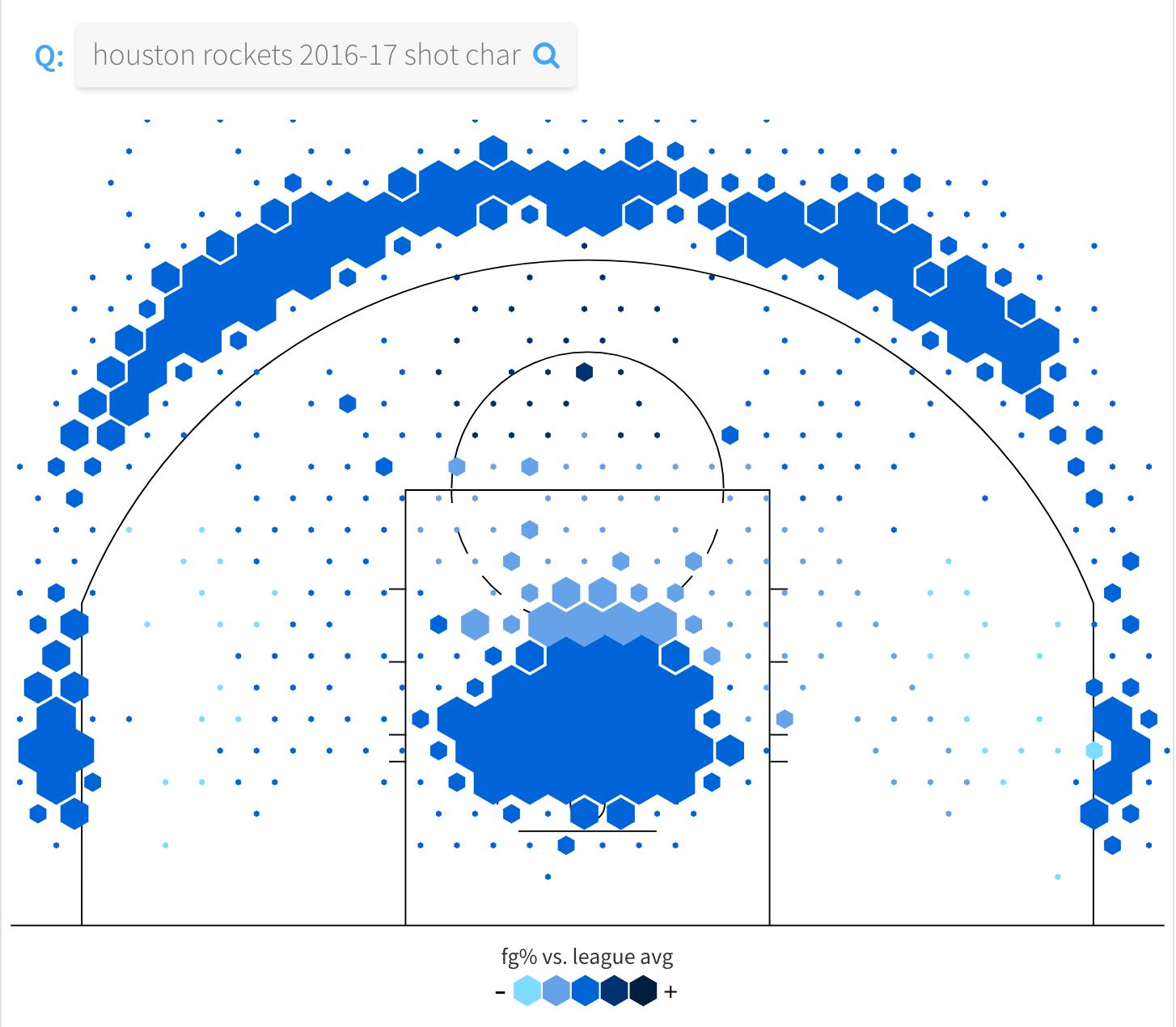
Even in the NBA, shots around the basket matter...like the Houston Rockets shot chart.
From Statmuse.com
Can we teach layups better or differently? I do not use conventional layup lines, because I think they don't simulate game action (Brian McCormick..."Fake Fundamentals").
1. No dribble layup (concept). Start the player at the three point line with the ball and allow three running steps, with the layup off the final step. Then allow the player one dribble. This reinforces the first step as the 'separation step'.
2. Hinkle layups.
Butler coach "Tony" Hinkle taught layups from multiple angles. We extend this approach by including 'reverse' layups as part of this drill. Never allow more than two dribbles.
3. Two by Two.
Score with two dribbles from half-court. Our goal is to teach players to score a layup with two dribbles from midcourt by high school. You can't 'waste' your first step.
4. Reverse Mikan.
Everyone knows the Mikan Drill. Work 'reverse Mikan'.
5. Two-footed finishing.
Excellent video demonstration and explanation on jump stop/power layups.
Bonuses:
Kentucky layups. We do two sets of two minutes. Four basketballs, two start in the middle, one at each end. Score as many layups as possible in two minutes. Accomplished women's teams can reach 65+.
For the "advanced class" study and practice Villanova finishing:
Villanova teaches the alchemy of footwork, balance, finishing, and embracing contact.
Remember Kevin Eastman's advice, "Eyes make layups; feet make jumpshots."
Even in the NBA, shots around the basket matter...like the Houston Rockets shot chart.
From Statmuse.com
Can we teach layups better or differently? I do not use conventional layup lines, because I think they don't simulate game action (Brian McCormick..."Fake Fundamentals").
1. No dribble layup (concept). Start the player at the three point line with the ball and allow three running steps, with the layup off the final step. Then allow the player one dribble. This reinforces the first step as the 'separation step'.
2. Hinkle layups.
Butler coach "Tony" Hinkle taught layups from multiple angles. We extend this approach by including 'reverse' layups as part of this drill. Never allow more than two dribbles.
3. Two by Two.
Score with two dribbles from half-court. Our goal is to teach players to score a layup with two dribbles from midcourt by high school. You can't 'waste' your first step.
4. Reverse Mikan.
Everyone knows the Mikan Drill. Work 'reverse Mikan'.
5. Two-footed finishing.
Excellent video demonstration and explanation on jump stop/power layups.
Bonuses:
Kentucky layups. We do two sets of two minutes. Four basketballs, two start in the middle, one at each end. Score as many layups as possible in two minutes. Accomplished women's teams can reach 65+.
For the "advanced class" study and practice Villanova finishing:
Villanova teaches the alchemy of footwork, balance, finishing, and embracing contact.
Wednesday, July 19, 2017
It's Not Just About Winning
Janis Meredith shares an article on youth sports. It's worth your time and has broader life applications.
She presents five practical questions for your child during those post-game rides home. She explains that LISTENING not JUDGING is the goal.
What was one thing that was really fun for you in today’s game?
What’s something that you would do differently if you had to play the game over again?
What teammate deserves a shout-out from you for how they played?
What’s one thing that you learned about teamwork from today’s game?
What did your coach do today that you really liked?
Tuesday, July 18, 2017
Practice for 2 Players
What's the perfect number for player individual skill development? I don't know but there's value in having two. I'm no standard, just somebody willing to throw out ideas and concepts. If you find anything useful, remember Picasso, "good artists borrow; great artists steal."
It's summertime and I'm not a track coach. Make it fun. You run on your own time.
What do you want to include? How long should practice be? Do you want to teach post skills to everyone? Show players drills that they can take home and work on (Camp Driveway). Teach the details and why. Pete Newell wrote, "they're not cattle."
Excellent players don't "get back to fundamentals". They constantly develop them. Show players the symmetry of the game. Learn how good defenders play and develop counters.
What concepts might we include in our two person practice?
Warmup. UCONN women did stretching and light jogging (two laps) around the court...no corners cut.
Random versus block practice. "In the retention tests, the results indicated that it was the random group that performed better on the retention task thus suggesting that random practice is more effective in the learning of motor skills."
The value of constraints. I believe in building in constraints during skill building. Limit the space, dribbles, and time the ball can be held. When possible, initiate skills off the catch (dynamic) instead of from a 'static' start.
Decision making and execution. Players learn more with decision-making and execution sequences.
Competition. Workout with a friend to develop competitive routines.
Which elements belong in a two-person workout?
Attack mindset. We use the three-point line as the 'spacing' line with two-dribble maximum.
Layups from multiple angles (straight and reverse)
Rollouts (closeout and attack)
See Spot run to a spot (few repetitions)
Separate from chest to chest defense
Frito Lay. Layup and shot from free throw distance
Ball handling. One-on-one inbound and attack.
Passing.
-Teach inbounding (coach defense) into the paint (look off the defender)
-Post entry (various)
-2 person (bounce pass and chest pass)
Shooting. (See previous posts on shooting games)
-Form shooting (flips, chair shooting, kneel and shoot)
-Quickness (quick draw...two-handed hard bounce, catch-and-shoot)
-Accuracy (shoot to side of backboard)
One on one separation play. (Creation and denial). With and without the ball.
Review footwork every practice (for better positioning both inside and outside).
Cutting (reading defenders in space and using screens). Coach can simulate various overplays to illustrate options to get open.
Review: Four ways to score (what's your go to and counter move).
Pierce Wing series without and with defense.
It's summertime and I'm not a track coach. Make it fun. You run on your own time.
What do you want to include? How long should practice be? Do you want to teach post skills to everyone? Show players drills that they can take home and work on (Camp Driveway). Teach the details and why. Pete Newell wrote, "they're not cattle."
Excellent players don't "get back to fundamentals". They constantly develop them. Show players the symmetry of the game. Learn how good defenders play and develop counters.
What concepts might we include in our two person practice?
Warmup. UCONN women did stretching and light jogging (two laps) around the court...no corners cut.
Random versus block practice. "In the retention tests, the results indicated that it was the random group that performed better on the retention task thus suggesting that random practice is more effective in the learning of motor skills."
The value of constraints. I believe in building in constraints during skill building. Limit the space, dribbles, and time the ball can be held. When possible, initiate skills off the catch (dynamic) instead of from a 'static' start.
Decision making and execution. Players learn more with decision-making and execution sequences.
Competition. Workout with a friend to develop competitive routines.
Which elements belong in a two-person workout?
Attack mindset. We use the three-point line as the 'spacing' line with two-dribble maximum.
Coach plays as x5
Layups from multiple angles (straight and reverse)
Rollouts (closeout and attack)
See Spot run to a spot (few repetitions)
Separate from chest to chest defense
Frito Lay. Layup and shot from free throw distance
Ball handling. One-on-one inbound and attack.
Passing.
-Teach inbounding (coach defense) into the paint (look off the defender)
-Post entry (various)
-2 person (bounce pass and chest pass)
Shooting. (See previous posts on shooting games)
-Form shooting (flips, chair shooting, kneel and shoot)
-Quickness (quick draw...two-handed hard bounce, catch-and-shoot)
-Accuracy (shoot to side of backboard)
One on one separation play. (Creation and denial). With and without the ball.
Review footwork every practice (for better positioning both inside and outside).
Cutting (reading defenders in space and using screens). Coach can simulate various overplays to illustrate options to get open.
Review: Four ways to score (what's your go to and counter move).
Pierce Wing series without and with defense.
Sunday, July 16, 2017
The Coach Who Changed Your Life
If you're reading this, you probably had a coach (or teacher) who changed your life.
First, a digression as Simon Sinek shares his thoughts on leadership in Leaders Eat Last
Key points:
1) Cultivate a culture of safety
2) Neurobiology drives behavior
3) Short-term leadership and long-term leadership are not the same
"Create an environment of trust." Organizations get more through collaboration. We cannot work together unless we trust each other.
Endorphins mask pain. Dopamine moves us forward. Serotonin produces pride and significance. Oxytocin drives connection.
Fear-based motivation doesn't work as well as growth mindsets and collaborative cultures. "When you put people before profit, results follow."
Back to our coach that made a difference. My coach, Ellis "Sonny" Lane took a perennial cellar dweller and turned it into sectional champions and later a state champion. How?
1. Establish a success culture. Team manager John Hunneman described the origins,
"In the summer before his first season (1970-71), Lane had gathered the players on the playground behind the Woodville School for an initial meeting.
There he pulled paint cans and brushes from his car and instructed the team to get to work sprucing up the playground court and painting the wooden backboards that were nailed to telephone polls. On one of those polls Lane painted in red, “Tech Tourney ‘73'” which is what the state high school basketball tournament was called in 1970.
That was the goal he told the players and Lane began to install the offense, defense and the attitude he said would take them there."
2. Attention to detail.
From the article, “Sonny was ahead of his time. We had shot charts, statistics, and scouts and used film. Back then others didn’t know much about the other teams they were playing but we did.” Coach Lane used analytics believing that rebounds and assists were the key statistics of the day.
3. Instill confidence.
Bill Parcells said, "confidence comes from proven success." We hadn't experienced much success previously. The turning point came after a crushing overtime defeat at home to the three-time consecutive champion Lexington Minutemen, previously coached by Rollie Massimino. A 45-minute post-game team meeting followed. "The only reason we lost was because it said LEXINGTON on their jerseys. We won't lose to them again, because we're better than they are."
4. Make corrections.
We struggled against Lexington's man-to-man full court pressure. Every day in practice we'd go 5 against 7, no dribbling allowed. Player and ball movement improved and thirteen consecutive wins, the last against Lexington in Boston Garden followed.
I still regularly have players practice 5 on 7 and 4 on 4 half court without dribbling.
5. Find what your players need.
Don Meyer noted, "what is unacceptable in defeat is unacceptable in victory." It's more productive to criticize play after victory than defeat. The girls already are frustrated and a little sad, because they were outmanned or outgunned. The most powerful words in basketball are "I believe in you." When I hear coaches describing players as "a disgrace" or "not worth living", I wonder what kind of person does that. "Never be a child's last coach." When players ask for letters of recommendation for college, private school, or special programs like STEM, I feel blessed and challenged to present them well enough.
Before someone tells me about their beliefs, show me how you live. The coaches who made a difference in our lives have their legacy extended through us. We owe them our better version.
First, a digression as Simon Sinek shares his thoughts on leadership in Leaders Eat Last
Key points:
1) Cultivate a culture of safety
2) Neurobiology drives behavior
3) Short-term leadership and long-term leadership are not the same
"Create an environment of trust." Organizations get more through collaboration. We cannot work together unless we trust each other.
Endorphins mask pain. Dopamine moves us forward. Serotonin produces pride and significance. Oxytocin drives connection.
Fear-based motivation doesn't work as well as growth mindsets and collaborative cultures. "When you put people before profit, results follow."
Back to our coach that made a difference. My coach, Ellis "Sonny" Lane took a perennial cellar dweller and turned it into sectional champions and later a state champion. How?
1. Establish a success culture. Team manager John Hunneman described the origins,
"In the summer before his first season (1970-71), Lane had gathered the players on the playground behind the Woodville School for an initial meeting.
There he pulled paint cans and brushes from his car and instructed the team to get to work sprucing up the playground court and painting the wooden backboards that were nailed to telephone polls. On one of those polls Lane painted in red, “Tech Tourney ‘73'” which is what the state high school basketball tournament was called in 1970.
That was the goal he told the players and Lane began to install the offense, defense and the attitude he said would take them there."
2. Attention to detail.
From the article, “Sonny was ahead of his time. We had shot charts, statistics, and scouts and used film. Back then others didn’t know much about the other teams they were playing but we did.” Coach Lane used analytics believing that rebounds and assists were the key statistics of the day.
3. Instill confidence.
Bill Parcells said, "confidence comes from proven success." We hadn't experienced much success previously. The turning point came after a crushing overtime defeat at home to the three-time consecutive champion Lexington Minutemen, previously coached by Rollie Massimino. A 45-minute post-game team meeting followed. "The only reason we lost was because it said LEXINGTON on their jerseys. We won't lose to them again, because we're better than they are."
4. Make corrections.
We struggled against Lexington's man-to-man full court pressure. Every day in practice we'd go 5 against 7, no dribbling allowed. Player and ball movement improved and thirteen consecutive wins, the last against Lexington in Boston Garden followed.
I still regularly have players practice 5 on 7 and 4 on 4 half court without dribbling.
5. Find what your players need.
Don Meyer noted, "what is unacceptable in defeat is unacceptable in victory." It's more productive to criticize play after victory than defeat. The girls already are frustrated and a little sad, because they were outmanned or outgunned. The most powerful words in basketball are "I believe in you." When I hear coaches describing players as "a disgrace" or "not worth living", I wonder what kind of person does that. "Never be a child's last coach." When players ask for letters of recommendation for college, private school, or special programs like STEM, I feel blessed and challenged to present them well enough.
Before someone tells me about their beliefs, show me how you live. The coaches who made a difference in our lives have their legacy extended through us. We owe them our better version.
Saturday, July 15, 2017
Favorite Zipper Cut Actions
Background. Zipper cuts are like morning coffee in the NBA. You can't really have a day without it.
First, a review of common NBA cuts. All of our players should watch this...about ten times.
Purpose. The zipper is versatile to initiate offenses and also has a lot of SLOB actions.
Actions.
Zipper ball screen with 21 screen late.
Unzip. Zipper action, post entry, back cut.
Los Angeles (LA) Zipper into STS action for lob. Lakers ran this for Kobe.
GSW action for Klay Thompson...gets an open shot or drive. Not even fair.
Friday, July 14, 2017
Favorite DHO Actions
Purpose. DHO helps create separation, mismatches, and challenges defenses unaccustomed to its defense.
Base Action.
4 takes two dribbles and hands off "on a platter" to 1 on the outside. 1 drives 'downhill' with a hard attack and the mentality to score. x5 is challenged to help (across) or stay. Sometimes x1 will overcommit opening up the pocket pass from to 1 on the back cut.
Favorite actions.
Horns into DHO backscreen weak. This draws the defense out...but spacing and timing are critical.
DHO stagger. This will get your chosen attacker open on the weak side or also establish the "two-man game" if 2 screens and leaves.
DHO 5 screen. 4 and 3 DHO with 4 rolling to corner. 5 sets elbow screen and defense must contend with consecutive screens.
Drills.
Continuous DHO (from Kevin Eastman)...this gets players into the framework. Attack, penetrate and pitch. When they get it, add defense and go live.
The coach plays "dummy" defense or overcommits. Players decide and execute.
Subscribe to:
Posts (Atom)