Total Pageviews

Wednesday, September 18, 2019

Basketball: Learn by Teaching

"Luck is the residue of design." - Branch Rickey 

Learn by teaching better. Richard Feynman earned his reputation as physics instructor with a four part strategy - name, define, research, and refine teaching specific concepts. Designer Diane von Furstenberg taught herself by standing at an imaginary blackboard facing imaginary students. She says, "building a brand...is designing your life." 


What's our basketball teaching DNA? Attention to detail. 
  • Simplify and clarify. 
  • Get and prevent separation. How?
  • Defeat and apply pressure. 
  • Make better decisions. 
  • Impact the game. 


Develop our eye. Excellent players study the game. "Why does it work?" 

What differentiates our product, service, team? If we ask our team, how will we succeed, what will they say? They might say, "work harder, help better on defense, or reduce turnovers." Or maybe, I'll see a lot of blank stares. Details make the difference. 

What homework assignment would you give a young coach? I'd ask for a self-scouting analysis. What are our strengths and weaknesses? Where do we score, where do we miss? Are we getting paint touches and ball reversals? The more granular the analysis, the better.


Watching more video helps us 'see the game' in its depth and variety. Coach Daniel reviews clearout concepts outside and within the pick-and-roll. 


Debbie Millman is a thought leader in graphic design. She's spent time and resources on psychotherapy to understand herself. She noted, "Lives are shaped by chance encounters and by discovering things that we don’t know that we don’t know." 

Learn and share to expand our world. Challenge ourselves to learn more and better. 

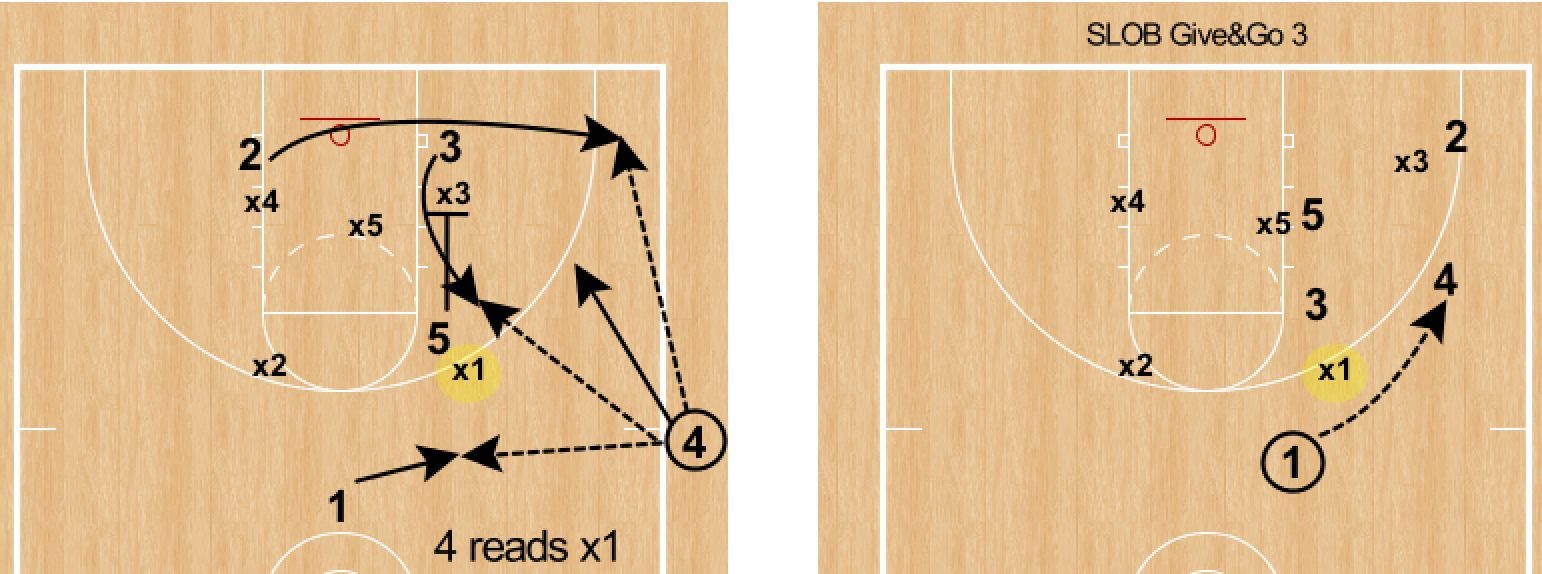
Lagniappe: Go away and come back? SLOB via @BBallImmersion
Louis Pasteur, "Chance favors the prepared mind." 


 "Pink" "Go away come back..." and set up a two on one...

Lagniappe 2: Want to learn better? Consider taking the Coursera course on learning...spaced repetition, Pomodoro technique, self-testing and more. 

Tuesday, September 17, 2019

POST 2000 - Basketball: What Inspires You?

Inspire. Lead. Teach. Energize. Share better. 

Find tools to build your worldview. We all have a drill book and play book. Find spreadsheets here with video teaching links, the Commonplace book, the Jar of Awesome, the "Take Home Bag", Must-Need-Want, and miscellaneous tools from among 2,000 posts. 

Celebrate collaboration, how we push each other forward, elevate players, and catch the few who are falling. 

In the fashion world, a "mood board" is an inspiration wall. What speaks to you? 


Here's a sample "mood board." Some items are obvious, others cryptic. 

1. Basketball goal messages 'targeting' and 'focus'.
2. NBA play types remind me to do more of what works, less of what doesn't
3. Keep the experience fresh. 
4. Practice time allocates scarce resources. Use it wisely. 
5. Spending time or investing it? 
6. Toes. Karma is real. 
7. Great ideas come from anywhere. 
8. Women make bold choices and take risks, too.
9. Fixing it today saves us tomorrow.
10.Trust the process.
11.Life is short (Murphy the dog is gone.).
12.Titles are ephemeral; memories are forever. Help players make memories. 
13.The Pyramid of Success cornerstones are enthusiasm and hard work.
14.Leave an impression; success leaves footprints.
15.Blinders..."a man distracted is a man defeated."
16.10-80-10. Drag some from the 80 percent into the top 10 percent.


Develop our own style. Diane von Furstenberg's designs inform her work, whether animal motif, black and white with single color, or whimsical (above). We should know DVF when we see it. Make our basketball lives have meaning. 

Creativity is ongoing...a process. Our teaching and coaching are dynamic, from season to season, team to team. 

Lagniappe: Falsely attributed to Gandhi, but great nonetheless:


"Be the change you want to see in the world." 

Basketball: Fast Five - Use Jargon Wisely

Jargon makes us and breaks us. We hold or lose players with our language. 

In his MasterClass, Malcolm Gladwell shares a chapter on jargon, using an example of Kaplan-Meier curves that visually display medical treatment effects. 


If the treatment works, the survival plot of treated patients (blue) separates above those not treated. The visual "punch line" leaves an impression on doctors (and patients). 

We use jargon every day - naming offenses, defenses, drills, tactics, and techniques. With young players and with learning disabled players (dyslexia, ADD, other), jargon adds confusion. Beware. 

Use jargon to up tempo and to get players into and out of actions during practice and games. For example, "specials" signals players to start our O-D-O (offense-defense-offense) segment of three possession scrimmages from BOBs, SLOBs, or free throws. 

Our players should know and define "back door cut," a cut toward the ball, then away. But they don't all know face/front cut, UCLA cut, zipper cut, shuffle cut, Iverson cut, and so forth. They should, but it's not their top priority. They know nutmeg, through passes, chest traps, triangle passes and various soccer terms, because many are 'soccer first' athletes. Tant pis! 

Duke coach Mike Krzyzewski called defending the high pick-and-roll "fake trap," more descriptive and intuitive than hedge or show. Kudos. Of course, KNOW THAT and KNOW HOW aren't the same. How many times have we heard, "I know, I know" after failed execution? 

"Camera" replaces "the ball is a camera," reminding players to move to open spots. "Wide" means run wide on the break, forcing defenses to cover more space. "Pinch" signals tight pressure when the dribbler has picked up the dribble. Yes, we need jargon. 

We could call full court pressure "Annexation of Puerto Rico," red, X, 99, 14, donuts, use hand signals or color cards, or simply UP! Use jargon well but can excessive jargon. Make jargon work for us not on us. 

Lagniappe: Road warriors?
Lagniappe 2: Quick reminders about road games: 

1. Discover the 'lines' (court boundaries) and asymmetries. Players catch the ball out of bounds when they don't know the boundaries. We've saved many possessions this way. One or two possessions often defines success and failure. 
2. Find the blind spots (bad lighting, dead spots on the floor)
3. Accept reality. The officiating won't be the same...five second calls come a little quicker and lack of hand discipline gets called more. I'm not asking officials for favors... just keep the kids safe (moving screens, wild elbows, dead legs, etc.). Girls can be brutal. 

Lagniappe 3: Know the power of fortune cookies. In Tribe of Mentors, Tim Ferriss interviews Graphic Art maven Debbie Millman. She shares a fortune cookie message, "Avoid compulsively making things worse." Sometimes, hold your fire. 

Monday, September 16, 2019

Basketball - Fast Five Plus: Basketball and Football


Few approach the genius of George Carlin. But I'll share basketball and football comparisons. 

1. Toughness, there is no substitute. Jay Bilas' Toughness book and essay are the seminal work on basketball toughness. Teams own both individual and collective toughness. Bilas rejects the Fugazi Tough Guy standard (chest thumping) and shares the nitty gritty, the attention to detail toughness leading success. Toughness standsas his legacy contribution. No toughness, no W's. 

Football players don't walk away from the sport. At best, they limp away. Not many exit at the top without broken bodies, maybe Jim Brown and Barry Sanders. Basketballers take more than an occasional ibuprofen...and that's not always safe, a contributor to kidney failure in NBA players. 

2. The quarterback must excel at decision-making and accuracy. Too many guys with "big arms" think they'll fit the ball into breadbox-sized spaces against the NFL cheetahs. Three out of four NFL games are lost, not won. Think Patriots-Falcons, 28-3. Point guards live the same fantasy. The Magics and Stocktons fall in love with easy. Find your road runners on the break or Paint Monsters who finish. Great players play in space, not in traffic.

Basketball isn't necessarily different. Coach Knight's The Power of Negative Thinking gives legions of examples of winning by avoiding error. Kevin Eastman's Why the Best Are the Best shares how the Celtics won a finals game despite allowing 32 points through defensive mistakes against the Lakers. 


3. Win the blocking and tackling battles. You might say screening is basketball's blocking. Rebounding is the basketball corollary. As for tackling, contain the ball. The combination of great athletes and skill make ball containment harder than ever. Help on the dribbler and you uncover perimeter assassins. Rebound well and contain the ball and you have chances at more possessions...and success.

4. Value the ball. Take care of the ball. "The ball is gold." Turnovers kill coaches in both sports. Study the why and how of mistakes. Held balls and forced shots (shot turnovers) are hidden turnovers. Bad footwork and passes to the wrong players in the wrong situations generate travels. Playing in traffic, failing to pass away from defenders, and not shortening the pass are all recipes for passing turnovers. Young players don't get that.


"If you are here, it's because you have a fervent, unequivocal belief in teamwork." 

5. "One band, one sound." Attention to detail demands everyone on the same page. Failure to finish cuts, not setting up cuts, and not knowing and reading options destroy scoring chances. Pete Carril remarked, "The quality of the pass directly impacts the quality of the shot." Today's lagniappe shows that perfectly. 

Lagniappe: Chris Oliver with some Puerto Rico magic...

Sunday, September 15, 2019

Basketball: The Take-Home Bag, Literally Wintour's Tale

In her MasterClass, Vogue editor Anna Wintour describes having the Take Home Bag. The office day doesn't end at the office. What's in our bag? Find something to "borrow" for yours. 

The most important item in "the bag" is The Book, the work-in-progress of the current edition of Vogue; she annotates using Post-It notes. 


Video (I have some video courtesy of a parent who filmed some games). 


(Caution, language) "What the eyes see and the ears hear, the mind believes." I'm not free of observer bias, but video redirects impressions. Turnovers and poor decisions like shot selection and pass selection stand out on film. 

Educational video (spreadsheet): Short video lessons 

Drill Book. I keep mine on Google Drive. I don't have a reason to have a physical version... actually I have several versions. Here's one. 

Practice schedule considerations:


Key questions: 
  • What does our team need now?
  • What do individual players need most? 
  • What is going well that we can do more?
  • What is going poorly that we must correct? 
Reading list/continuing education: 
Formal (written) Game Plan

Collate into "active version" of The Book (practice plans, offensive game plans including core concepts and special situations). 

Lagniappe: quality passes or separating moves often require versatile skilled finishes. They don't grow on trees. Special finishes require volume practice. 

Saturday, September 14, 2019

Powering Our Brand

"Your brand has to be at the core of all your creative decisions. What is it? What does it stand for? How do you move it forward?" - Anna Wintour

What 'covers' represent your brand?


Leave an impression. 

Success leaves footprints. Every team member should understand and trust our process.


Inspire. 


Run as though your life depends on it. For the cheetah, it does. 

Maya Angelou reminds us, "I've learned that people will forget what you said, people will forget what you did, but people will never forget how you made them feel." 


What if? 

Ideas are the currency of the future. Intellectually challenge conventional wisdom. But lightbulbs also represent shared energy. Pete Carril said of some players, "I call them light bulbs. They walk on the floor, the light goes on."


Persist. 

We can't control whether teams out-execute us, outshoot us, or have superior size and athleticism. We control our preparation, our work ethic, and our competitive will. Be steak not catnip, substance not flash.  


Keep pounding. Distinguish "this is who we are" from "that is who we are not." Don't settle. Don't skip steps. 


Lagniappe: In high school soccer, at the end of practice, we ran two laps around the field (no cutting corners), more than 600 yards, in less than 1:50, to "prove" our conditioning. Success exempted you from subsequent timed laps. The exercise was about will not speed. (Basketball players were required to play soccer or run cross-country.) 

Good article on teaching persistence via physical activity. Highlights:
Emphasise the psychological process.  It is necessary for children to be aware that they are predominantly learning psychological, not physical, skills in these sessions. 
Establish why determination would be desirable. "Would you like to be more determined? "What would be the benefits to you?"    
Be clear that persistence is not dependent on physical ability.  
Seeing value in the result. Linking determination to results that they will value more highly, such as health benefits, or implications for academic success, can enhance motivation.  
Leverage peer support.  Encourage pupils to work in pairs or small groups and discuss how this supports determination. 

Friday, September 13, 2019

Basketball: Five Constructive Habits for Players

Developing good habits informs your process. We make our habits and our habits make us. Decisions determine destiny. 


Are we spending our time or investing it? 

1. Use checklists. The definitive work on checklists is Atul Gawande's Checklist Manifesto. Checklists are integral to the aviation industry, medicine, construction, the restaurant business and more. 

2. Develop a winning morning routine. Win the day! 


Find what works for you. 

3. Be prepared for practice and games. Pack your bag the night before and recheck before practice or the game. Have your uniform and sneakers, contacts, tape and adhesive bandages, medical supplies (e.g. inhaler), extra socks, extra shoelaces, water bottle, snack, and you name it. 

4. Keep a journal. Write down what the team is working to accomplish. Physically writing out important information helps us move information from our working memory into our long-term memory. 

5. Learn and practice mindfulness. Who practices mindfulness? Over eighty percent of the most successful people practice some form of mindfulness, including meditation, yoga, or transcendental meditation. Mindfulness improves attention, sleep, memory, and lowers anxiety, depression, and stress hormones. It has a rich science underpinning its effectiveness, elaborated in Search Inside Yourself. Mindfulness allows us to upgrade our hardware (brain) and our software (information processing subroutines). 

Lagniappe: 


The best teams and athletes in the world practice mindfulness. Why not you? 


Thursday, September 12, 2019

Basketball: Core Values Versus Disruption

"Some no-huddle snaps and an offense operating quickly is essentially the offense’s way of blitzing the defense." - Nick Underhill, The Athletic

Coaching begins with a philosophy. Communicate with players. Respect the game. Grow your knowledge. Decide where conventional wisdom belongs and disruption encroaches. 

The audience can't define the game; exciting game play attracts an audience, trust, and loyalty. 

What informs your core? In a developmental program, prioritize fundamentals, sharing the ball, getting and limiting quality shots. "Basketball isn't a running game; it's a sprinting game." Emphasize teamwork, improvement, and accountability to each other. 

When do you disrupt? Some teams are all about winning. Limit roster size. Play the best players the most. Get them the most shots. Play zone defense. None are 'bad strategy' yet none are disruptive. It's a stretch to proclaim entrenched ideas about three-point shooting and defensive switching as disruptive. Disproportionate time devoted to small-sided games, a diversity of finishes, and defensive technique might be. 

Developing original ideas is hard. It's far easier to repackage ideas or combine 'standard' ideas in different ways. Within our editorial decision-making, we lead and model leadership. Coaching "gorilla basketball" while constantly badgering the officials about calls isn't disruptive or leadership. 

Maintain a catalog of ideas in a notebook, commonplace book, or spreadsheet. Refer back to those ideas to measure their validity and durability. 

Explore the basketball world. Vogue editor-in-chief Anna Wintour shares that we have to "make the wrong choice." You can't succumb to fear. Coach values and help players on their discovery of the broader world. Above all, we are learners and teachers. 

It's worth remembering, that if we think that we're the smartest guy in the room, then we probably need to get out more. 

Lagniappe: John Leonzo (@John_Leonzo) shares his newsletter including video and more. 

Lagniappe 2: Another shooting drill for more advanced players, combines different shots with conditioning. 


Wednesday, September 11, 2019

Why I Coach Girls' Basketball


Coaching empowers team members. Coaches take teams where they cannot go alone. 

Recently Forbes shared their list of America's 100 Most Innovative Leaders list. They asked the question, "Who are the most creative and successful business minds of today?" Their list included ninety-nine men and one woman, Barbara Rentler, CEO of Ross Stores at 75. Four men, including three business school professors, developed the list. 

Bernard Lewis wrote What Went Wrong, after 9/11, examining why Middle East societies lag the West. It wasn't history, because the Islamic world pioneered areas of science, freedom, and economic development. But the author notes, "Another approach has been to view the main culprit as the relegation of women to an inferior position in Muslim society, which deprives the Islamic world of the talents and energies of half its people."

Within sport, women lagged in opportunity, particularly prior to Title IX (1972), with inferior coaching, worse facilities, and fewer resources (practice time, scholarships). Girls often had higher status as cheerleaders or majorettes than athletes. 

Yet, even with Title IX, women haven't achieved equality. The United States have never ratified the Equal Rights Amendment, women haven't earned equal pay for equal work, and this extends to professional sports as well, such as the US Women's National Soccer Team. 
Participation in sport helps girls in many ways - in health, in school, in social advancement, and as future leaders. Female athletes earn better grades, higher graduation rates, higher self-esteem, and lower teen pregnancy rates. 

Leveling the playing field won't come only from providing equal access to competition and practice time. Girls need experienced, enthusiastic, invested coaches (women or men) willing to fight for them. During my lifetime, I've seen excellence from many women coaches, but other programs content to higher a convenient coach, not the best coach available. Recently, the outstanding Braintree girls' coach Kristen McDonnell was hired to lead the Norwood Boys' Basketball program. That's progress. 

In Geno Auriemma's book, he described UCONN women players being told that the Athletic Department would hire the best woman coach available. The players asked, why couldn't they have the best coach, not the best woman. 


The highlights of my coaching career aren't league championships or players achieving a college basketball scholarship. It's seeing girls winning in the classroom and in society, girls earning advanced degrees or reaching their dream, like a former player in her third year at the United States Naval Academy in Annapolis. 

We regularly hear women candidates for office dismissed as shrews, unfeminine, or witches. Take charge men are strong leaders or direct. Powerful women are bitches. Title IX got more women onto the field but hasn't broken through the glass ceiling. 

So, I coach to empower women, to encourage them to knock down the doors impeding them, to lead families, lead in the classroom, and lead on the field. Anything less should be unacceptable to my family and to yours. As for Forbes, you blew it. 


Basketball: Five Favorite Individual Shooting Drills, Plus Lagniappe

Somebody. Everybody. Nobody. When asked to spell my name, that's the answer. Just another guy with mostly stolen ideas. Shooting is perishable...practice from competence to excellence. 

My teams haven't shot the lights out...not for lack...of trying. The best drills combine more elements - decision-making, defense, competition. 

Here are five favorite shooting drills (that don't take forever)


Around the world (timed, counting misses, no rebounder)


Elbow to elbow and elbow to sideline (more conditioning). Always set a goal. High school players should make at least eight. An eighth grade girl made 7 of 10 yesterday (as well as 7 of 10 three-point catch-and-shoot). 


"251" - Younger players (and really old guys) shoot closer spots (e.g. 15 footers)

Beat the Pro (Bill Bradley) - Make 11 before missing 4 as a miss counts three points for Bill Bradley (easy). Version 2 is make 15 before missing 2 (hard). 


Celtics 32. Three-level shooting. Scoring in the twenties is excellent for middle school. 

Lagniappe: shooting form via Chris Oliver


Tuesday, September 10, 2019

Basketball: Individual Workout Concepts and Lagniappe from USA-Brazil

Summer brings uncertainty. Sometimes only one or two players participate in a workout. Have clear priorities. I don't have all the answers, not by a long shot. Here's what we worked on two days ago:

1. Footwork for separation
2. Scoring from three levels, plus free throws
3. Finishing  

Obviously, there are countless footwork drills with basketball moves.

Footwork 
- McHale move (up and under from each side)
- Front pivot (off inside foot at block) into reverse layup
- Box drills into layups and one dribble shots 
- Wing attack catch, inside foot pivot, rip through into layup or shot
- Wing attack catch and reverse pivot/deep step into layup 
- Wing attack with outside foot pivot with rip into layup
- Catch into hesitation and crossover dribble into shot

Three-level scoring
- Inside moves above 
- Mid-range shooting off the catch, one-dribble moves, and step back
- Three point shooting off the catch

Finishing at the rim
- Reverse Mikan drill
- Numerous layup finishes above

Expose the player to "second order" thinking. What might I be tasked with and how can I practice that? Practice getting open for catch-and-shoot threes.


Create game simulation practice it.


Scoring off the bench. Steve Kerr used to practice sitting on the bench and coming into the game for a three-pointer. We worked on that yesterday with a SLOB inbound into a give-and-go for threes. It's a work in progress (thirteen year-old girl). 

Lagniappe: Jaylen Brown with an assist vs Brazil after attack from top of spread
Lagniappe 2: USA runs hammer action and Smart scores on reverse layup


Monday, September 9, 2019

Fast Five: Leadership in Vogue - Wintour's Edge

Benefit from cross-disciplinary concepts. The latest course at MasterClass.com shares the leadership style of Anna Wintour, Editor-in-Chief at Vogue and Creative Director of Conde Nast. 

Women share great ideas and a different perspective than some men. Like men, they're not always right. 

Overview:


Figure out how you want to collaborate in articulating and elaborating your vision. Leaders focus on making organizations better. 

Have a clear sense of the "voice" of your organization, what fits and what doesn't. 

Know what you want to accomplish with a meeting or an article. 

Anna believes in what some call "distributed leadership." Everyone deserves a voice, but that doesn't mean everyone gets to decide. Fast feedback works best. 

Be decisive but not peremptory. 


If an idea or personnel group won't work, just say no and move on. 

Lagniappe: A spread offense with multiple options. Our players are not sophisticated enough to run this yet. But the concept is good.


Lagniappe 2: I'd rather invest more practice time in fundamentals and small-sided-games, especially 3-on-3 inside the split. 


With two coaches and two groups, freelance development works well. Some examples are listed; many more exist. 


Sunday, September 8, 2019

Fast Five: Bench Engagement

We can't have separate teams of starters and reserves. Excellence demands total engagement throughout the team.


Great coaches know the importance of full participation. 


"We put a huge premium on body language. If your body language is bad, you will never get in the game...I'm checking what's going on on the bench." 

Pat Summitt routinely filmed the Tennessee bench to assess their involvement. 

Coach Roy Williams was recruiting a player who fouled out. The player didn't sulk. He sprinted to the water cooler to get cups of water for his teammates still in the game. His actions showed a 'team first' player. Williams knew he had someone special. "Your actions speak so loudly I cannot hear a word you say."  

Head coaches can't see everything, so assistants have to monitor the bench. Find willing energy givers on the sidelines. Players who GIVE from both the court and the bench make important contributions. 

Layups.com suggests 8 ways to encourage reserve players. 
1. Take the time to teach them individually
2. Follow their progress
3. Recognize their skills
4. Motivate them to improve their game
5. Listen to them
6. Give them the responsibility
7. Let them feel that they are important to the team
8. Take chances on them: Let them play
Dean Smith knew the importance of publicly recognizing reserves who contributed to winning. He found ways to praise players who got less media attention, as a tool to get full engagement. 
Lagniappe: Great advice from PGC video


  • Celebrate your teammates
  • Give your teammates reminders
  • Know the time, score, and situation